If you’ve spent any time on menopause-focused blogs, sites, or social media lately, you’ve probably noticed that everyone is obsessed with fiber. Not a fancy supplement that claims to melt belly fat, or a miracle food that’ll eliminate hot flashes overnight. Fiber.
It turns out that fiber might be one of the most underrated tools in a midlife woman’s arsenal, and science is finally backing up what Grandma said all along. I distinctly remember daily prunes on the menu, and a mini-lecture every time I turned my nose up at them.
Most women only eat about half the fiber they need. Experts recommend at least 25 grams daily (some say 30 grams for menopausal women), and the average woman gets somewhere between 13-15 grams. That gap is significant, especially when your hormones are in a midlife roller coaster phase.
What Fiber Does
Fiber helps with elimination. Declining estrogen messes with your digestive tract muscles, so constipation becomes more common. Digestive regularity is important, but it does a lot more than keep you regular.
Fiber works behind the scenes to directly address what’s happening in your body during menopause.
The risk of heart disease jumps after menopause. Many women see their cholesterol numbers creep up even though nothing else has changed. Soluble fiber binds to cholesterol in your gut and helps to escort it out of your body. In turn, this has been shown to lower LDL cholesterol and lower the risk.
Your cells become more resistant to insulin as estrogen and progesterone decline. This insulin resistance drives weight gain (hello, belly fat) and raises your diabetes risk. Fiber slows down carbohydrate digestion, preventing blood sugar spikes and helping insulin work more effectively. Clinical trials show women who supplement with fiber see better fasting blood sugar and improved insulin resistance.

Your gut bacteria shift during menopause, and not in a good way. These changes lead to fat storage, slower metabolism, and insulin resistance. Fiber feeds the good bacteria in your gut. When the bacteria ferment fiber, they produce compounds that reduce inflammation and support your immune system.
Your liver and gut team up to process and eliminate excess estrogen. During perimenopause, when hormones are all over the place, this cleanup work becomes vital. Fiber supports hormone metabolism and excretion, which might ease some symptoms driven by hormonal imbalance.
Midlife weight gain is real and can be frustrating. High-fiber foods take longer to digest, so you feel full longer. Satiety can prevent the temptation to overeat that can come with unstable blood sugar and unstable hormones.
More Connections
A study of over 2,400 perimenopausal and postmenopausal women found that those eating at least 25 grams of fiber daily had 20% fewer moderate to severe hot flashes compared to women eating the least number of grams. Researchers are still working out exactly why, but the connection between gut health, inflammation, and hot flashes is worth looking at more closely.
About half of all women may experience some degree of pelvic organ prolapse. Menopause increases this risk, and chronic constipation makes it worse because straining weakens your pelvic floor. Preventing constipation with adequate fiber helps to protect against prolapse.
The Two Types You Need
Soluble fiber dissolves in water and forms a gel in your gut. This is the kind that lowers cholesterol and stabilizes blood sugar. You get it from oats, barley, apples, pears, beans, lentils, and chia seeds.
Insoluble fiber doesn’t dissolve, but adds bulk and keeps things moving. Vegetables, whole grains, nuts, and fruit skins provide this type.
Most high-fiber foods contain both types, which is why eating a variety of plants gives you the best results.
Actually Getting Enough
Knowing you need more fiber and actually eating it are two different things. Preparing high-fiber foods can take some effort; for example, grabbing baby carrots is easier than cooking dried beans. But the payoff is worth it.
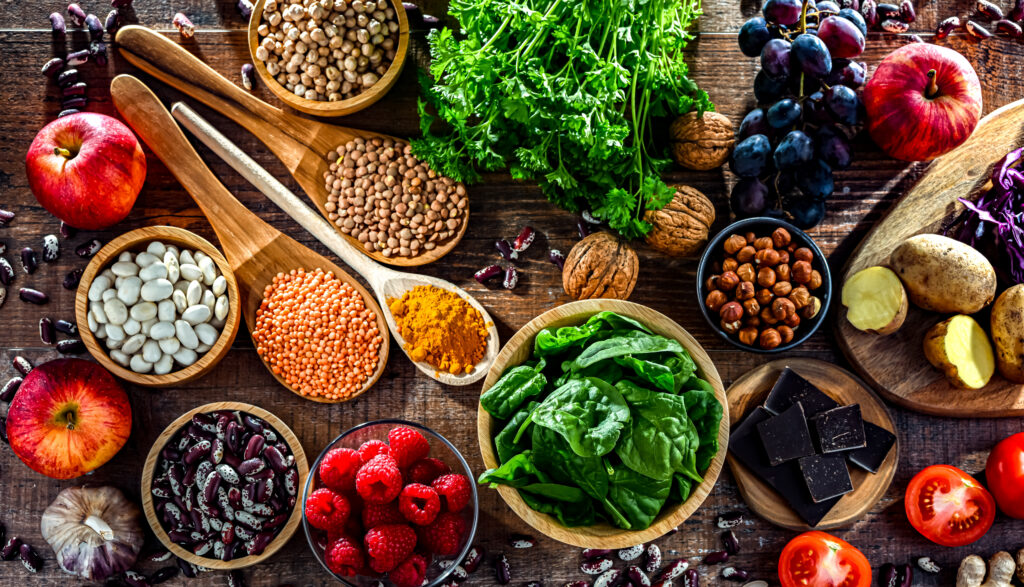
Some ways to increase your fiber intake seem to appear on almost every healthy eating list. For example, “start the day with oats,” “add berries,” and “fill half your plates with vegetables” are common suggestions. These are good ideas that include fiber, though they’re not fiber-specific. For fiber specifically, add beans or lentils to soups, salads, and grain bowls; use whole grains instead of refined grains; and snack on nuts, seeds, or fruit with the skin on.
Increasing fiber gradually tends to work better than jumping from 13 grams to 30 overnight, which can leave you bloated and miserable. Your gut bacteria need time to adjust. Adding 5 grams at a time over several weeks, along with plenty of water, makes the transition easier.
Fiber Supplements
Fiber from whole foods is ideal, but supplements can help. Psyllium husk and inulin are common options, and they work best when added to real food instead of replacing it. It’s worth checking with your doctor before adding them if you take medications or have digestive issues.
Supplement quality varies a lot. Products with research-backed doses (usually 5-10 grams daily) and minimal additives are your best bet.
Why This Matters
Fiber isn’t an exciting new AI-enhanced transformational tool or a new wonder drug. For women dealing with changes in midlife, fiber offers something equally, if not more enticing: multi-system support backed by science.
The fiber conversation is overdue recognition that this dietary staple addresses multiple midlife challenges: blood sugar stability, weight management, heart health, gut health, hormones, metabolism, and hot flashes. Sometimes, straightforward solutions really are the most effective, and I’d like to think that somewhere, my Grandma is smiling and nodding with a silent “I told you so.”