Posts about living in, understanding, and finding the best of mavenhood.
The Digital Magazine

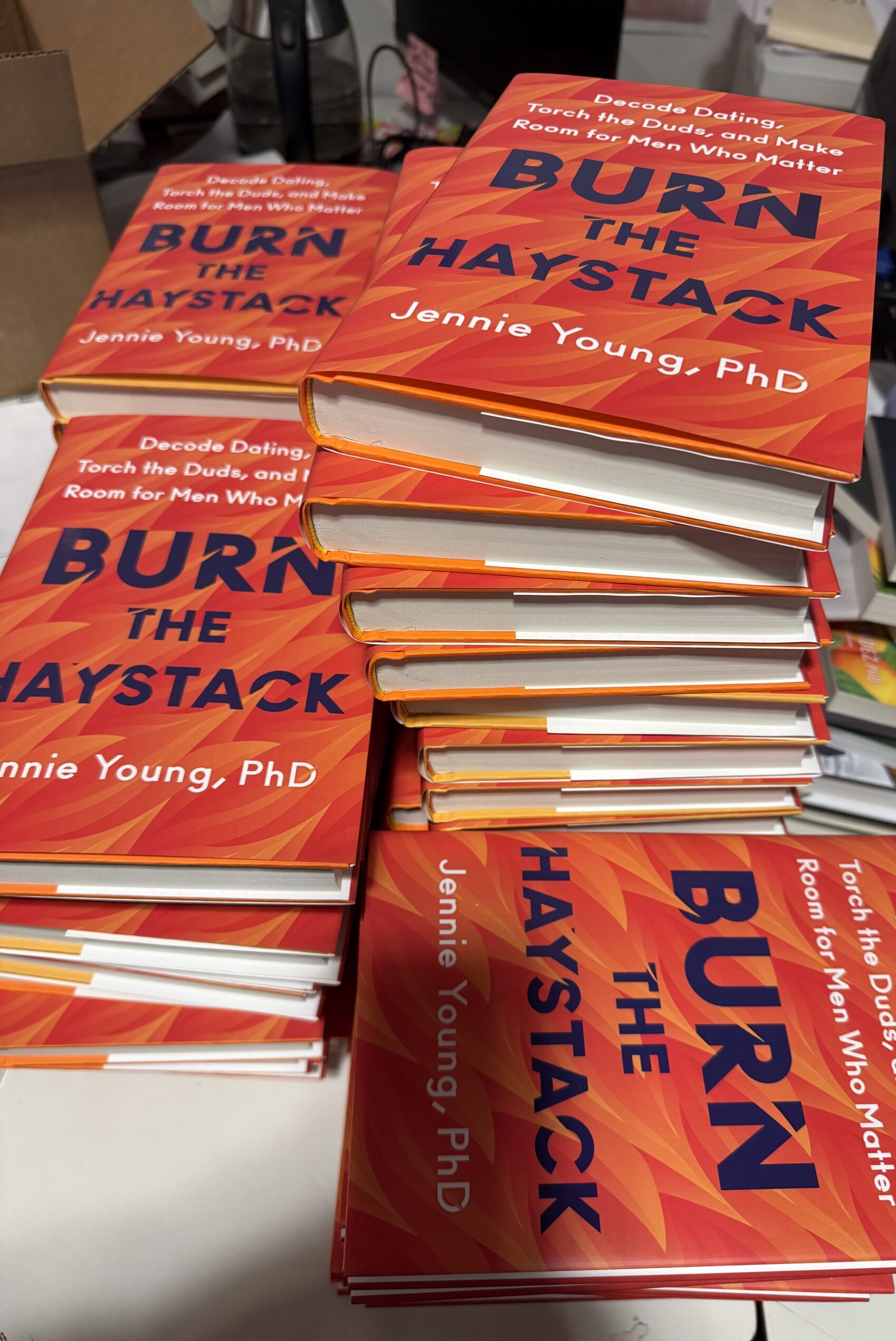
Most traditional dating advice recycles the same message: stay open, give people a chance, and look for diamonds in the rough. Burn the Haystack by Jennie Young, PhD takes a different approach to dating, especially for women navigating dating in midlife, built around protecting your time, peace, and sanity.
Disclosure: This post contains affiliate links. If you buy something through these links, we may receive small commissions that support this site. As an Amazon Associate, we earn from qualifying purchases.
Young, a professor of writing and rhetoric, is sharp and funny, with a communication style that makes dense language and complex ideas easy to follow. She uses a metaphor to describe how dating works: a long-term partner is a needle, and the online dating pool is a haystack. If you’re looking for a needle in a haystack, it makes sense to burn the haystack to find it. In specifically looking for your needle, there may be a lot of metaphorical hay to burn.
The Burned Haystack Dating Method® has been tested and refined in a private Facebook group where it’s discussed daily. I’ve been part of that group for about two years, and watching these patterns play out across a community of women made it clear the book would be popular before it hit the shelves.
Burn the Haystack builds on the dating method’s foundation, using examples of the patterns Young identifies and walking through each concept in depth. Since algorithms will reintroduce someone you swiped left on, blocking matches that aren’t a fit is part of saving your own time and energy. Block to burn, or B2B, is the online version of burning the haystack. B2B is a key component of the Burned Haystack Dating Method® and central to its methodology.
Young breaks down the most common profile types using critical discourse analysis, applying her expertise to decode language that often hides more than it says. She highlights how phrases that look harmless often carry clearer signals once you slow down and read them closely. “Just ask” signals low effort and an expectation that someone else (you) will do the work. She also describes the very common “My kids come first” as deceptively positive. Since there’s already a baseline expectation that children are important, adding “first” implies you would always be vying for second place.

Reading profiles this way changes everything; what used to feel like a gut reaction you couldn’t quite put your finger on becomes something you can actually see and articulate. You move through the selection process faster, with more confidence and far less second-guessing. In the 33 rhetorical patterns Young breaks down, it becomes clear how chaotic the dating pool actually is, especially if you haven’t been on dating apps in a while.
Aside from reading profiles carefully for what’s behind them, Young suggests being honest with yourself about what works for you. For example, if you’re scared of heights, this should be included in how you assess matches. It doesn’t matter how cute the mountain climber is if you’re not interested in climbing or in a long-term partner who spends his time doing that.
For women in mavenhood, the midlife stage where childless, childfree, and empty nester women refocus on themselves, this dating approach works particularly well. The dating pool is more complex, expectations can be unclear, and time isn’t always viewed in the same way. Potential holds less weight, and what’s actually there in terms of character, personality, and lifestyle matters more.
When you do swipe right and match, the next level of CDA (critical discourse analysis) comes into play in how each match interacts, asks questions, and moves forward. Young talks about pen pals, flags behavior that signals controlling tendencies, and calls out men who expect unconditional love in exchange for less than the bare minimum.
There’s also a level of discipline to this method that doesn’t get talked about as much. Trust what you’re seeing the first time, without adding to it or softening it. It means not going back, not revisiting a profile to see if you read it too quickly, and not giving a conversation more time than it deserves. For many women, this means unlearning what they’ve been taught to accept over decades: the instinct to give the benefit of the doubt, to be generous with second chances, and to shrink their own needs to make room for possibility. Making different decisions in dating starts with recognizing those patterns in yourself.
As this practice continues to gain popularity, the approach has already expanded beyond dating. At the book launch in New York, one woman described how decoding job descriptions led her to her ideal role, proof that reading language critically and trusting what you find changes more than your love life. Looking at dating, or any online communication, from this perspective feels refreshing. Everyone I’ve spoken to about it wants to hear more. It turns out a book about reading dating profiles is really a book about reading people.

Mavenhood is a unique life stage for those who are child-free, childless, or not focused on raising children. It’s a chapter defined by the freedom to choose what you’re moving toward. Like motherhood, mavenhood is a journey where we all strive to do well, with the added empowerment of making all of our own choices. At Mavenhood Society, we celebrate this chapter and support those pursuing mavenhood with intention, clarity, and community.
Somewhere after forty and into your sixties, the way the world sees you starts to shift. You may have been called a crone, old maid, boomer, solo ager, perimenopausal, menopausal, or older adult. Choose to embrace being the fabulous, incredible, awe-inspiring person you are, and live fully in your mavenhood era. Take this time to define success, fulfillment, and connection in ways that feel right to you, beyond the traditional structure of motherhood.
For some, this was always the plan. For others, it is a new beginning. Either way, this life stage is real, rich, and worthy of attention. Mavens build lives shaped around who they are now and what they want next. If you’re looking for a space to learn about and explore this life stage, Mavenhood Society offers ideas, inspiration, and a sense of belonging.
Mavenhood isn’t the pursuit of a second-best life or a consolation prize for reaching midlife. It asks for soul-searching honesty, patience, and the freedom to imagine something new. If you’re waiting for permission to claim this chapter, name and own your priorities, live with intention, and release old scripts, consider finding this post your green light. You already have everything you need to begin.
First and foremost, being the best kind of maven means claiming your time, attention, body, and resources as your own. It means asking yourself what matters now, not what once mattered to others. And it means stepping fully into the richness of life without looking back.
Here are ten areas where that journey can take shape.
1. Identity Beyond Roles
You are not only a daughter, a sibling, a friend, or a professional; you are all of these and more. You are a whole person. Living without children allows space to reexamine who you really are when no one is demanding your energy. Strip away obligations and explore the parts of yourself that may have been dormant. Are you an artist? A scientist? A builder? A teacher? You get to decide.
Write your own definition. Say it out loud. Let it evolve. Let this become the center of your life, not a footnote.
2. Emotional Agency
Owning your story includes the right to feel everything that comes with it. Pride. Relief. Anger. Sadness. Peace. Resentment. Joy. You do not have to apologize for your feelings. Nor do you have to justify your choices.
Make space to feel it all. Sit in silence. Take walks. Go to therapy. Talk with people who respect your path. You are not broken, lacking, or selfish. You are whole.
3. Community on Your Terms
The child-free, childless, and empty-nester community is growing but is often still invisible. Building connections with others who share your life experience can be a game changer.
Start by finding one or two people who get it. Reach out. Have coffee. Laugh. Share stories. Mavenhood does not require a crowd, but it thrives on meaningful connection. That’s what Mavenhood Society is here for. Please bookmark our site and follow us on social media to stay up-to-date.
4. Redefining Care
You can be deeply nurturing without ever having children, as well as after raising them. That innate energy can shift towards younger relatives, friends, pets, students, or people in need. It can also be applied to the arts, environmentalism, or activism. You get to decide who or what you want to sustain.
Care, when chosen freely, becomes an act of purpose. It moves from obligation to devotion. Making that shift can feel liberating and intentional.
5. Pursuit of Learning
Stay curious. Learn a language. Pick up a trade. Study a new field. Your brain deserves exercise and delight. Sign up for courses that feed your interests. Read books outside your usual categories. Go to lectures or try hands-on workshops.
You are never too old to start something new. Exploration is always an option. You have a license to continue or begin again as you choose.
6. Creative Expression
Child-free and childless lives are full of stories; give yours room to breathe. Whether through writing, painting, music, design, cooking, or some other medium, creativity creates meaning. These projects are a way to process your life, connect to others, and leave a mark.
Try experimenting, even if you don’t typically consider yourself creative. Take a photo every day. Try a dance class. Rearrange your space. Make something out of nothing. You don’t need to be an expert to enjoy the experience. Let yourself create for the joy of it.

7. Home as a Reflection of You
Let your home reflect the way you actually live. Whether you live alone or with a partner, design your space around your routines and comforts. Consider how to best use your space to suit your lifestyle, e.g. carve out a space for reading, set up an area to write or move your body, bring in soothing lighting, or choose artwork that inspires you.
You are allowed to live without a guest room for when the kids or your cousins visit. Use every room. Take up space. Make it yours.
8. Financial Autonomy
Without the financial responsibilities of childrearing, you may have different options. While that doesn’t necessarily mean you’re wealthy, it might mean more flexibility. Use it with intention. Create a budget that aligns with your goals, not someone else’s milestones.
Your financial priorities might include travel, wellness, continued learning, giving, or planning for retirement. Whatever matters most to you, let your spending and saving reflect those values.
9. Health and Vitality
Your health is something to protect and enjoy. Build routines that support your body and mind. That could be a regular walk, strength training, meal planning, therapy, meditation, or all of the above.
Prioritize appointments. Try new recipes. Learn what works for your hormones, sleep, and energy. Your body is not a machine to serve others; it is your home.
10. Your Legacy, Your Way
You do not have to pass on your values through children. You can achieve this through mentorship, advocacy, writing, art, or setting an example. Think about how and what you want to be remembered for. How do you want to show up in the world?
Here, mavenhood becomes legacy. Legacy is shaped by how you live today and how you use your power to prepare for tomorrow. It shows up in your presence, your priorities, and the way you influence those around you.
Your Life, Your Terms
Mavens do not ask for permission to exist outside of childbearing or childrearing years. In your mavenhood era, shift to a mindset that invites you to live more fully and listen more closely to what you need and want. Recognize that your time and voice matter now more than ever.
You are not waiting for the next phase. You are embracing every moment that has brought you to this one. What you do next is entirely up to you.
If this path speaks to you, you are not alone. Mavenhood Society was created to offer a home for child-free, childless, and empty nesters like you. This is your space, your season, and your mavenhood. Savor it.