
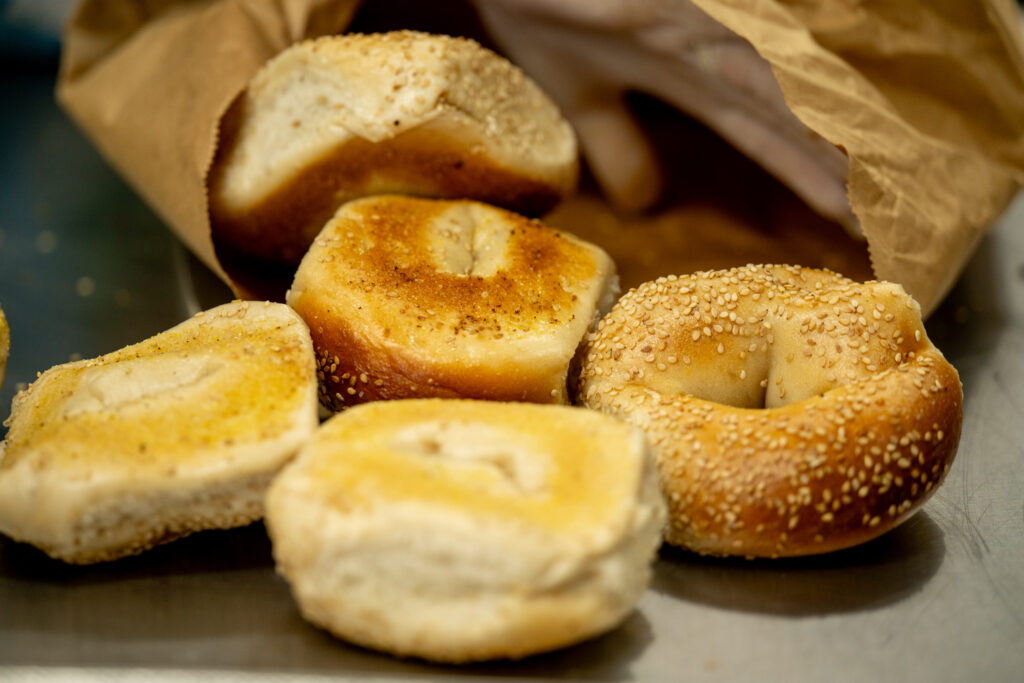
At a small coffee shop, a counterperson in a bad mood gave me two stale bakery items with something that could have been described as a grunt and a nod toward the exit. A separate trip to a bagel shop gave me a beautiful, fresh baker’s dozen bagels, packed for me on arrival in exactly the assortment I requested. A small restaurant with prepared food to go gave me a couple of hefty portions of mixed salads that would have been well received by someone who enjoyed those ingredients.
For each of these Too Good To Go pickups, I’d chosen the $5.99 option. A larger restaurant gave me food from its deli section that was good for another day and, when combined into two meals, felt like a steal. In New York, these were each the cost equivalent of a large coffee to go or one slice of pizza.
Too Good To Go is an app that offers prepared foods and groceries close to their expiry dates at a steep discount. Restaurants and shops sign up and prepare discounted “Surprise Bags” of various sizes, available during specific pickup windows. As an app user, you select the restaurant or store, your pickup time, and bag size, e.g., small or large. The surprise is in not knowing what the bag will contain, as it changes based on what’s close to the end of its saleable life that day and time.
It’s a fun way to try out a new spot, especially one that might not otherwise wind up on the calendar, and at their price points, the risk-to-reward ratio is generally pretty good. The app operates across more than 20 countries, and the assortment directly correlates to your location. There are thousands of options in New York City, and I’ve tried a select few with mixed results. The product in the bags is sometimes predetermined and other times selected in real time by the person you find at the pickup counter.
There are benefits besides a good deal to be found on this app. There’s a little thrill when I get a good bag, like I won something. More of those small moments are always welcome, whether they’re justifiable or not. There have been flavor combinations I wouldn’t have thought to try, like a savory orzo salad, and servings of dishes that take longer to make than my schedule usually allows, e.g., pastries that require multiple rounds of preparation. The feeling that you’ve prevented some food waste and supported another local business adds to the list of pluses in my book.
As the app has gained popularity, it’s also expanded to include meals, groceries and baked goods. In navigating choices, I avoid overwhelm by choosing my direction first. Do I want to pick something up at a specific time in a specific neighborhood, e.g., I’m going to a meeting in Chelsea; what’s available around the time that meeting should end? Or do I want something from a specific restaurant, e.g., I’ve heard great things about this place, but it’s not a cuisine I know well; let me try a Surprise Bag as a test run. The ratings are also a big part of the app; users share what bags they thought were a good value and which they weren’t as impressed by. Sometimes I check the bag reviews on this app before deciding whether to make a standard dining reservation.
Near-expiration stock is part of what keeps the cost of the bags down, and not every partner offers Surprise Bags daily. A restaurant you want to try might not be on the app at all, or might have an inconvenient pickup time window. In New York City, some of the most popular places require a little effort; they can sell out within minutes of their bags becoming available. Sections for vegetarian and vegan foods make it easy to search, but there’s no way to check if a specific ingredient, e.g., shellfish or tree nuts, will be included in the Surprise Bag you order.
In midlife, finding easy ways to try new things is high on my list of priorities. I keep Too Good To Go on my phone because it offers multiple options on days when quick and easy takeaway is exactly what I need, and a dose of newness is welcome.