Posts about living in, understanding, and finding the best of mavenhood.
The Digital Magazine

Red light therapy is a skin care and wellness practice based on how your cells respond to light. These therapies use specific red and near-infrared wavelengths that penetrate the skin and support repair.
Instead of relying on heat or intensity, this approach works through absorption. Skin cells take in the light and use it as a signal. With repeated exposure, that signal supports skin quality, circulation, and recovery. Improvements appear over time and fit naturally into long-term routines.
Different formats deliver light in different ways. The experience you choose affects what and where improvement is targeted.
What regular use can support
Devices focused on the face support appearance and skin firmness. With regular use, skin often appears smoother, tone looks more even, and areas typically prone to irritation are calmer.
Full-body red light therapy pairs light with warmth and is typically part of recovery-focused routines. Recovery after long days or physical strain can feel easier. The greatest benefits of red light therapy come from repetition.
Where red light therapy shows up
Red light therapy is now regularly offered in spa and wellness settings, alongside other recovery and skin treatments.
Dermatology offices and spas often use LED masks or panels for the face, neck, or targeted areas.
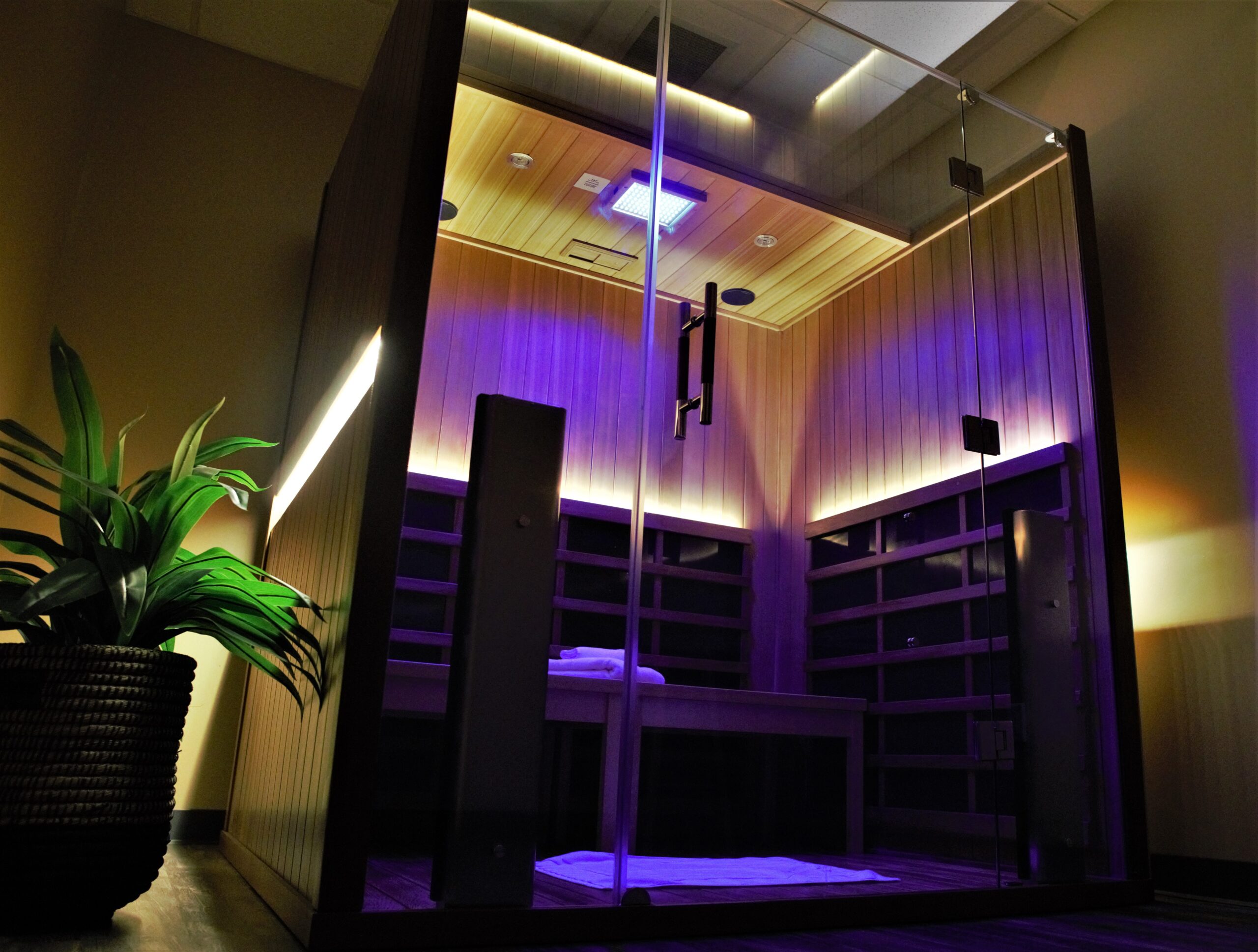
Many spas offer infrared saunas with light therapy. These combine infrared warmth with red and near infrared LED panels inside the cabin. The heat supports circulation while the light promotes cellular regeneration. These sessions are often chosen for recovery and a reset.
At-home devices apply the same principles through shorter, more frequent sessions that fit into personal care routines.
Choosing an approach that fits your routine
| Smoother looking skin and firmness | At home LED face mask | Delivers red and near infrared light where texture shifts tend to show first |
| Neck and chest care | LED neck and décolletage device | Addresses thinner skin shaped by movement and sun exposure |
| Recovery and full body relaxation | Infrared sauna with light therapy | Combines warmth and light for circulation and deeper tissue support |
| Simple, repeatable routine | Face mask used several times a week | Reflects how most clinical and spa protocols are structured |
Two popular at-home options
Disclosure: This post contains affiliate links. If you buy something through these links, we may receive small commissions that support this site. As an Amazon Associate, we earn from qualifying purchases.
The Omnilux Contour Face LED Mask uses red and near-infrared light on the face. People often choose it for fine lines, texture shifts, and overall tone. Results depend on regular use, not intensity.
The CurrentBody Skin LED Neck and Décolletage Mask focuses on the neck and upper chest. This area often shows early change. Repeated sessions help achieve smoother skin.

How different light colors are typically used
Many LED devices include multiple color settings. Each color represents a different wavelength and purpose.
Blue light does not penetrate as deeply and is commonly used for breakout-prone skin. It’s often used to help with skin congestion.
Green light is chosen for uneven tone. It supports reducing skin discoloration and visible redness.
Yellow or amber light is associated with brightness and increased circulation near the skin’s surface. It’s often used when the skin looks tired.
Orange light is positioned as a glow-focused option. People pair it with red light to support overall skin vitality.
Red and near infrared light penetrate deeper layers and focus on firmness, texture, and recovery. Most research on aging skin focuses on these wavelengths.
Pairing skin care with red light therapy
Red light therapy fits best into routines where skin already feels balanced.
Exfoliating acids such as glycolic, lactic, and salicylic acids can thin the skin’s surface. When used on the same day as light therapy, skin can be more sensitive. Exfoliation fits best on days without light sessions.
High-strength retinoids increase cell regeneration and heighten reactivity. Using them on alternate evenings from red light therapy keeps both practices effective while supporting comfort.
Benzoyl peroxide can dry the skin and affect the barrier. Spacing it away from light therapy sessions helps skin stay more even.
After light therapy, hydration is suggested as an end to the treatment. Moisturizers with ceramides, glycerin, or hyaluronic acid help maintain softness and flexibility with regular use.
Daily sunscreen is a key part of maintaining healthy skin over time. Light therapy supports skin quality while moisturizers and sun protection help preserve visible progress.
What consistency looks like over time
Red light therapy can be a relaxing break from a workday, included as part of a spa visit, or added to the end of other treatments or workouts. Single sessions can range from 10 minutes to an hour, depending on which therapy you choose, what is recommended for you, and how much time you have. Most people start to notice positive changes after several weeks of consistent use.
When light therapy fits easily into your life, its positive effects build alongside the rest of your routine.

The sudden explosion of AI use has sparked some controversy over privacy, connection, and content quality. It seems less attention is given to its practical applications in daily life. AI can be a great assistant or organizing tool. When you bring in information, it can be reshaped into a simpler, easier-to-use format in seconds. The examples below focus on familiar situations where that kind of support could be useful.
1. Turn Online and Printed Recipes into Grocery Lists
If you’re like many people, you probably have recipes saved online, marked in cookbooks, written on cards, clipped from magazines, or collected from product inserts. AI can work with any of these formats.
To use an online recipe with AI, open your chosen AI tool and keep it ready. On your phone or computer, go to the recipe and find the ingredients and instructions. Highlight, copy, and paste the full recipe into the AI tool. Then ask the AI to make a grocery list and group the items by sections such as produce, dairy, meat, and pantry.
A sample request looks like this:
“Please turn this recipe into a grocery shopping list and group items by produce, dairy, meat, and grocery items.”
For a printed recipe, lay the page flat and take a clear photo with your phone, making sure the text is readable. Then, either copy and paste the text into the AI tool or upload the photo directly. Ask the AI to read the recipe and make a grocery list.
You might say:
“Please read this recipe from the photo and create a grocery list. We’ll be making the recipe for four people.”
If you’re planning more than one meal, you can paste several recipes or upload multiple photos and ask for a single combined list. You can also ask the AI to adjust quantities or leave out items you already have.
AI can help you make holiday grocery lists quickly and easily. It might even reduce last minute trips to the store for forgotten items.
2. Turn a Travel Idea into a Clear, Organized Itinerary
Travel planning often starts with a general idea of where you want to go. You can ask the AI tool to suggest places that typically have your preferred weather during your travel dates, or destinations within a certain travel time by car, train, or plane. The AI can research these options based on your questions and help you make an informed choice.
When you’re ready to plan a specific trip, tell the AI tool your destination, how long you’ll stay, and the time of year. Ask for a daily itinerary that includes sightseeing, meals, and downtime. You can also mention your preferred pace, how much walking you want to do, and any special interests, such as museums or breweries.
You can ask AI about flights by giving your departure city and requesting typical flight options, travel times, and common airlines for that route. For hotels, lists of properties within specific areas, including certain amenities, are just an ask away. Pricing and availability change frequently, so this overview works best as a way to narrow your options before booking.
A clear example prompt is:
“Please suggest hotels in central Lisbon for a four-night stay in early May, including current price ranges.”
You can make the itinerary as detailed as you want. When it comes to train times, ferry routes, or other dynamic scheduling information, AI isn’t always fully up to date. Once you have a general plan you like, official sites offer the most up-to-date details.

3. Plan Meals Using What You Already Have at Home
Meal planning can feel overwhelming when you have a long to-do list, even if your kitchen is well stocked. AI can help by starting with the ingredients you already have.
Open your AI tool and type out a list of ingredients from your fridge, freezer, and pantry. Then, ask for meal ideas that use those items.
For example:
“Here’s what I have available in my kitchen. Please suggest three dinner ideas using these ingredients.”
You can ask for recipes that are lighter, easier, quicker, or make for leftovers. If you’re willing to shop, you can also ask AI what extra ingredients would go well with what you already have.
4. Make Instructions and Fine Print Easier to Work With
Detailed, printed instructions often require careful reading. Appliance manuals, medication inserts, return policies, and warranty cards are common examples.
If the information is printed, take a clear photo of the page and upload it to the AI tool. If it’s online, copy and paste the text. Then, ask the AI to rewrite it in plain language or turn it into a checklist.
An easy way to ask is:
“Please explain these instructions in plain language and rewrite them as a step-by-step checklist.”
If the instructions span several pages, you can upload multiple images and ask for a single, combined set of steps. This may not make the project itself easier, but it should make the instructions clearer before you get started.
5. Make Medical Information More Understandable
Medical information often comes in dense, tiny print. AI can help by turning it into everyday language.
If you find a medical article, test result, or printed handout that’s hard to understand, copy the text or take a photo and upload it to the AI tool. Then, ask for a clear explanation in simple language.
An example of a prompt for this might be:
“Please explain this medical information in everyday language and list questions that would be useful to ask my doctor.”
This kind of preparation can support better medical conversations for you, or anyone you’re accompanying on a visit.
How to Work with AI Comfortably
AI works best when you use clear, natural language. Write your requests as if you’re explaining something to another person. If the answer is too long, ask for a shorter version. If it’s unclear, request a different format.
Each AI chat builds on your previous messages, so you can decide when you’re done with the task. As with all online interactions, safeguard your personal information. Going to official sites and double-checking information and schedules is always a safe bet.
Why This Approach Works
Tools become part of daily life when they make things easier or better. Quick access to information can be genuinely useful when it helps move things along. Used selectively, AI helps organize information quickly and reduces repetition. Small time-savers add up, and those reclaimed minutes make space for time spent offline, on other priorities.