Posts about living in, understanding, and finding the best of mavenhood.
The Digital Magazine

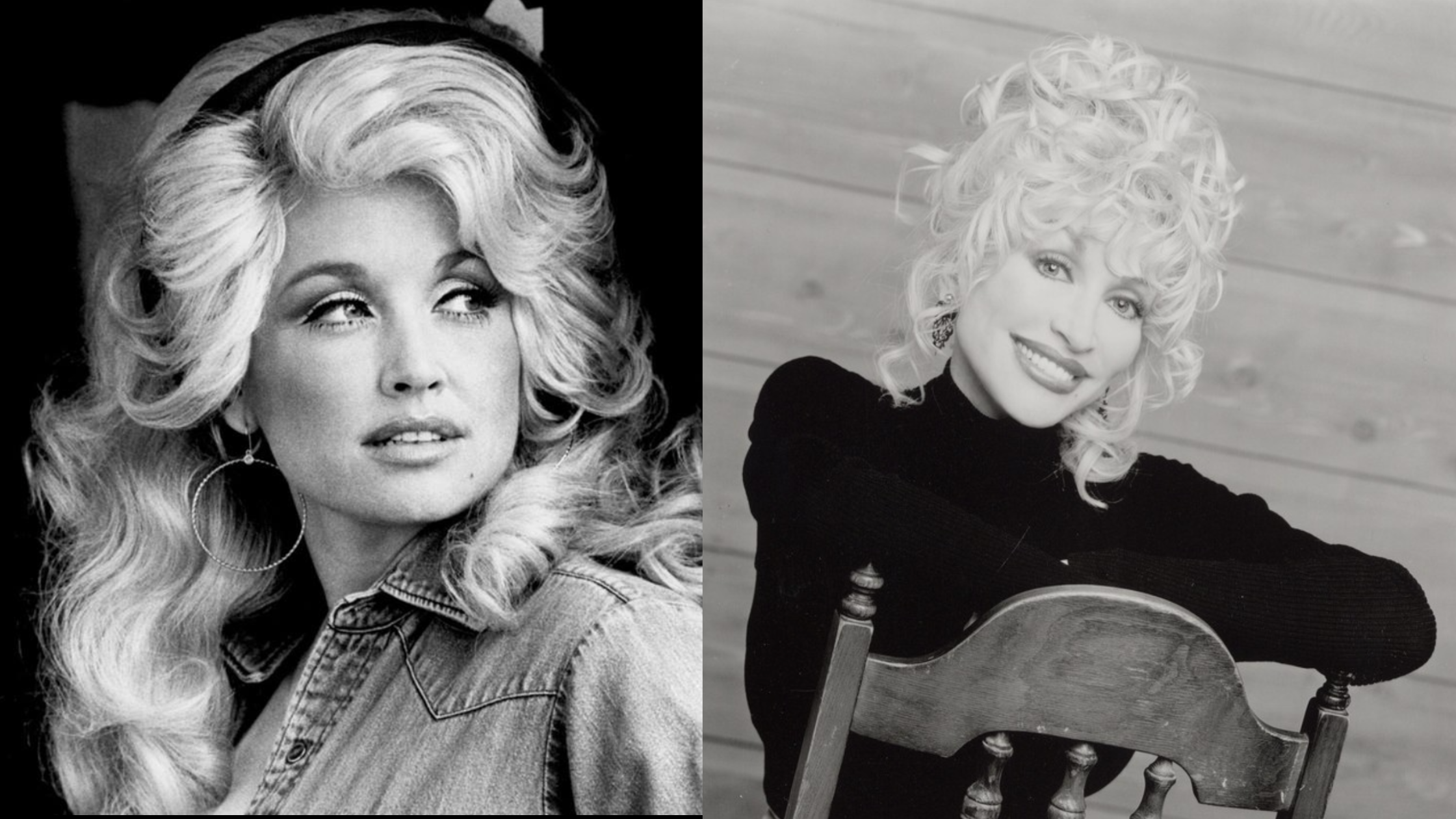
Dolly Parton was an icon who knew how to write a hit song, make a strong entrance, run a business, and get a laugh. She wore wigs, rhinestones, and six-inch heels, and seemed to enjoy being underestimated. She was known to make audiences of all sizes feel as though she’d invited them into her own living room. When she died in 2026 at age 80, she left behind more than six decades of music, several successful businesses, and an almost unparalleled amount of goodwill.
Her career began long before the rhinestones became a trademark. One of twelve children, she grew up in a two-room cabin in Tennessee. Dolly started singing and performing as a young girl and appeared on local television as a pre-teen. The day after graduating from high school, she moved to Nashville, determined to make a living writing and singing songs. Within a few years, she appeared regularly on The Porter Wagoner Show, where her talent and personality brought national attention.
By the early 1970s, Dolly was ready to establish herself as a solo artist, and in 1973, she wrote both “Jolene” and “I Will Always Love You.” These two songs became among the most recognizable of her career; she wrote the latter as a farewell to Porter Wagoner when she decided to leave his television show and pursue her own work. She later turned down a chance for Elvis Presley to record it when his manager demanded half the publishing rights. [1] She admired Elvis, but she knew her songwriting had value. Whitney Houston’s 1992 recording for The Bodyguard would eventually introduce the song to an entirely new audience.
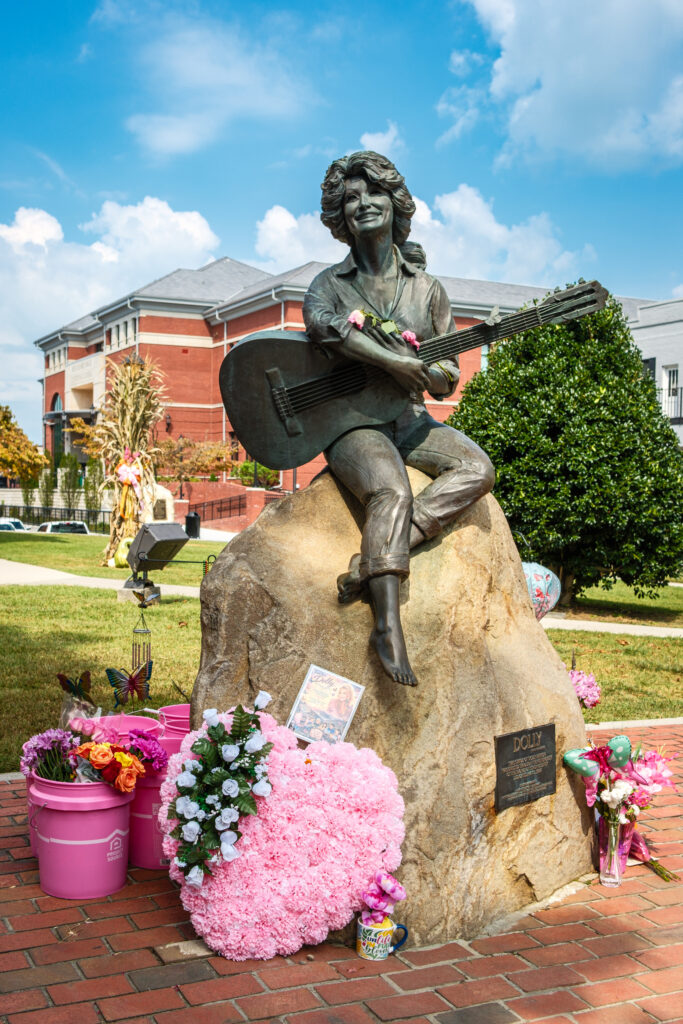
Her success moved beyond music into film, television, and business. The movie 9 to 5 was a hit and gave her another signature song. In 1986, she opened Dollywood in Pigeon Forge, Tennessee, turning a regional amusement park into a major tourist destination. Later, the film Steel Magnolias introduced her to audiences who might never have bought a country album. She also supported education, healthcare, and disaster relief in her home state, and in 1995 she founded the Imagination Library in Sevier County, where she grew up. Her father, Robert Lee Parton, never learned to read or write, and she wanted books to reach children in their homes. The program began by mailing free, age-appropriate books to children in her home county, regardless of family income. The Imagination Library expanded to five countries and, by June 2026, had distributed more than 325 million books. [2]
She was public about her wigs, makeup, and cosmetic procedures but kept her nearly 59-year marriage to Carl Dean private. Dolly met Carl at a Nashville laundromat in 1964, on her first day in town. They married two years later and remained together until his death. Carl ran an asphalt paving business and rarely attended public events, preferring to stay out of the spotlight. This arrangement worked for them, and Dolly spoke affectionately about the independence they each enjoyed, while letting people wonder about the details.
Dolly and Carl had no children, and she spoke about it with candor for decades. In a 1984 interview with Andy Warhol and Maura Moynihan, she said, “I couldn’t have children, I tried to for years.” [3] She had never been pregnant, and she said she missed the possibility for a while. [3] She and Carl had imagined a daughter named Carla. “We talked about it, and we dreamed it, but it wasn’t meant to be,” she told The Guardian in 2014. [4] In 2023, she told Saga Magazine, “I haven’t missed it like I thought I might.” [1]
She was well known for appealing to a wide range of people who agreed on very little. She knew her audience, knew her business, and knew herself. Her humor and warmth were part of her charm, as was her willingness to speak plainly without turning every opinion into a public argument or every private matter into a public one. When Carl died in March 2025, she shared a short tribute to the man she’d loved for most of her life. Dolly stayed closely involved in the projects she’d built over the decades, even as her own health presented challenges. [5]
Dolly Parton left a catalog of songs, a set of successful businesses, and a literacy program that will keep putting books in children’s hands for generations. She also left decades of memorable one-liners and an unapologetic love of glamour. Her life makes a convincing argument for knowing exactly who you are and enjoying it.
Footnotes
[1] Saga Magazine, updated August 2026 https://www.saga.co.uk/magazine/entertainment/dolly-parton-if-something-is-bagging-or-sagging-or-dragging-ill-tuck-it-suck-it-or-pluck-it
[2] Dolly Parton’s Imagination Library, official website. https://imaginationlibrary.com/
[3] Interview Magazine, 1984 interview with Andy Warhol and Maura Moynihan, reprinted January 2012https://www.interviewmagazine.com/culture/new-again-dolly-parton
[4] The Guardian, December 6, 2014 https://www.theguardian.com/music/2014/dec/06/dolly-parton-more-to-me-than-big-hair-phoney-stuff
[5] People, interview with Dolly Parton as reported by the Illawarra Mercury, August 22, 2026. https://www.illawarramercury.com.au/story/9335288/parton-still-healing-after-hard-times-with-health/
Karl was disappearing. My husband was regularly drowning himself in alcohol. Numbing. Angry. He was going somewhere I couldn’t follow him. We were still doing things together, but we weren’t really moving together anymore. We were going in two different directions.
And yet we kept trying to recreate the picture of family. We would force family time, because that was what families did. Plan the beach day. Show up for the family function. Go to church. Take the trip. Smile for the picture.
And somewhere underneath all of it was a knowing that I was no longer really there. I didn’t have the words for it then. I only knew I felt far away. From my life. From my husband. From my children. And mostly, from myself.
There was a time when I thought we were doing everything right. We were married. We had children. We showed up for birthdays, holidays, dinners, and did all the things families are supposed to do together.
The disconnect was there because I was focused on doing what I had been taught a family was supposed to look like. Be a good wife. Be a good mother. Work hard. Build a life. Retire someday. And then, I suppose, keep working through retirement. From the outside, our life probably looked pretty normal.
Inside, I was disappearing. We were disappearing, and I was afraid.
Then came 2020. Something began to shift inside me. I started hearing an inner voice that felt different from the voice I had been following for most of my life. It wasn’t loud. It didn’t demand anything from me. It simply kept dropping these powerful little jewels of truth.
For the first time, I started listening. One of the first truths that came through so clearly, I found myself saying it out loud to other people: “You don’t have a soul. You are your soul.”
At the time, I didn’t fully understand what was happening. I only knew that something inside me was waking up. It was as if I had spent years looking outside myself for instructions for how to live, and suddenly I was beginning to realize the answers were already inside me.
I became curious about myself. About life. About what was possible. About what made me feel alive. The more I listened, the more I began to recognize the woman who had been there all along. Once I caught hold of that thread, I kept following it.

She was still there. She wanted to play. She wanted to wander. She wanted to go deeper. She wanted to follow what interested her instead of automatically doing what was expected of her. She wanted to feel life again, and by October 2021, I had started allowing her.
Karl noticed. Although he was still drinking. Still angry. Still numbing himself. But every now and then, I would catch a glimpse of his expression when I talked about something that excited me. He was intrigued by my passion. My curiosity. My fervor for life.
I don’t think I understood then what was happening between us. I wasn’t trying to change Karl. I wasn’t trying to pull him out of where he was. I was simply coming back to myself. Something about watching me come alive seemed to stir something in him too.
In January 2022, Karl became alcohol-free.
I remember feeling that something had shifted. Not everything. But something. An open door into a completely different chapter. And yet, it wasn’t the end of everything that had been difficult between us. In some ways, it was the beginning of finally being able to see what was hidden beneath the pain.
Trust didn’t return just because the drinking stopped. There was too much history between us. I had to learn to trust that this change was genuine. Karl had his own work to do, too. We both had to learn to trust ourselves again and then slowly learn to trust each other.
There was no dramatic moment when everything clicked into place. It happened in small moments. Conversation by conversation. Choice by choice. Until, little by little, we began moving in the same direction. And somewhere along the way, we began to feel our love. Before, it had felt as though there were walls around both of our hearts. Now there were small openings. Enough for vulnerability. Enough for honesty. Enough for love to move between us again.
I was also learning something new about myself during this time. I had begun learning a practice I call Speaking Truth From The Heart as part of a personal development course. It was teaching me something I had never really learned in all our years together: how to speak honestly without blame, and how to listen without becoming defensive.
I eventually asked Karl to come with me to a weekend retreat where we would learn the practice together. He wasn’t immediately excited about the idea. There was resistance, and underneath the resistance was fear. He was nervous. He was carrying self-doubt. He was unsure of what might happen if we actually sat across from each other and said what was true. Still, he came. And somewhere inside that weekend, something began to change.
We practiced speaking truth. We practiced staying present. And for perhaps the first time, we had a way to tell the truth without making the other person wrong. Something started to soften. And then, unexpectedly, something started to spark.
Karl began seeing something in me that perhaps he hadn’t seen in a long time. Genuine happiness. Not the happiness I had learned to put on. Not the smile for the family picture. Something deeper. Happiness that was coming from my soul. And I began seeing something in Karl. Life. Vibrancy. A spark in his eye.
We weren’t going backward. We were discovering a new way forward.
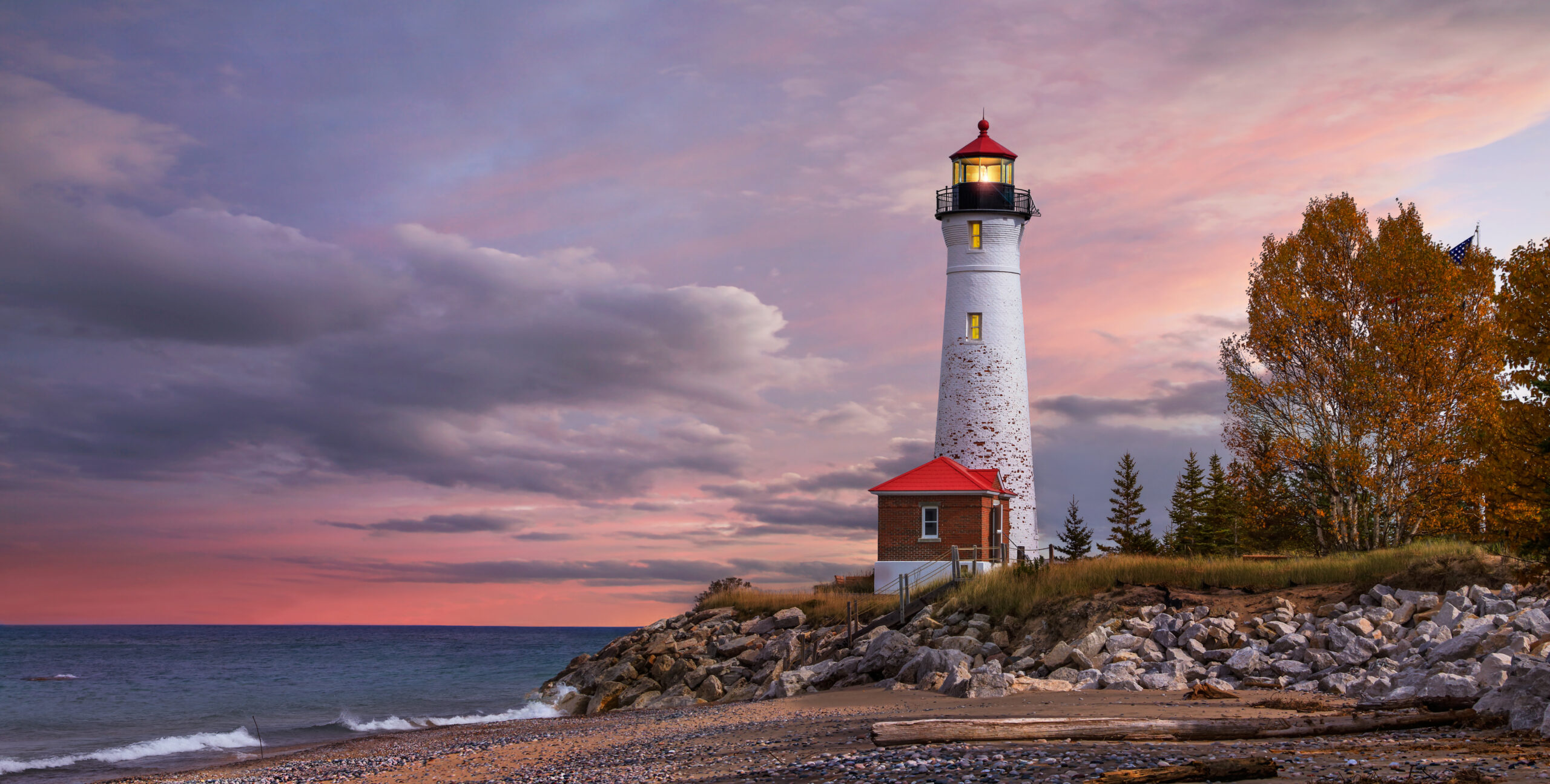
I remember one vivid moment when we were sitting on a blanket under a tree near a lighthouse. It was a place we had gone to when we were teenagers. Only now, we weren’t those teenagers. We had been married for decades. We had built a life and a family together. And I remember thinking, “We’re enjoying each other again”.
We had experienced some beautiful things. And some painful things. We each had to find our way back to ourselves. And there we were. Together. Talking. Laughing. Living life.

Sitting there with Karl, I realized something I hadn’t understood before. Coming back to myself didn’t take me away from my marriage. It allowed me to show up more fully inside it. For so much of my life, I had known myself through the people and roles I took on as they were defined by other people. A daughter. A wife. A mother. A family. A home. A career woman.
All of those things mattered deeply to me. And yet, somewhere along the way I forgot to ask: Who am I underneath all of that? What do I love? What makes me curious? What makes me laugh? What makes me feel alive?
I believe there is another kind of belonging. Belonging to yourself. And for me, that didn’t mean needing Karl less. It didn’t mean becoming more independent from the people I love. It meant becoming more present with the woman I am.
Loving myself first didn’t mean loving Karl less. It meant I could finally let my love move outward from a place that felt honest. I could express myself without shame. I could be vulnerable. I could tell the truth about what I was feeling. And I could trust that being fully myself didn’t make me harder to love.
Maybe this is part of what happens in midlife. The life we built begins to change. The roles that once filled every corner of our lives begin to shift. Suddenly, there is room to hear yourself again.
Nearly five years later, these are the questions I find myself carrying. Not because we have everything figured out. We don’t. But because I am curious about this version of us. About who Karl is becoming. About who I am becoming. And about who we are becoming together.
I used to think coming home meant returning to something familiar. Now I think coming home means finally meeting yourself where you are. Maybe that’s what happened for us. I came back to myself. Karl came back to himself. And somewhere along the way, we found our way back to each other. Not as the two people we had been. But, as the two people we are becoming.
Every once in a while, when I recognize something in myself that I thought I had forgotten, I can hear the words: “Oh… there you are.”
Estimated reading time: 7 minutes