Posts about living in, understanding, and finding the best of mavenhood.
The Digital Magazine

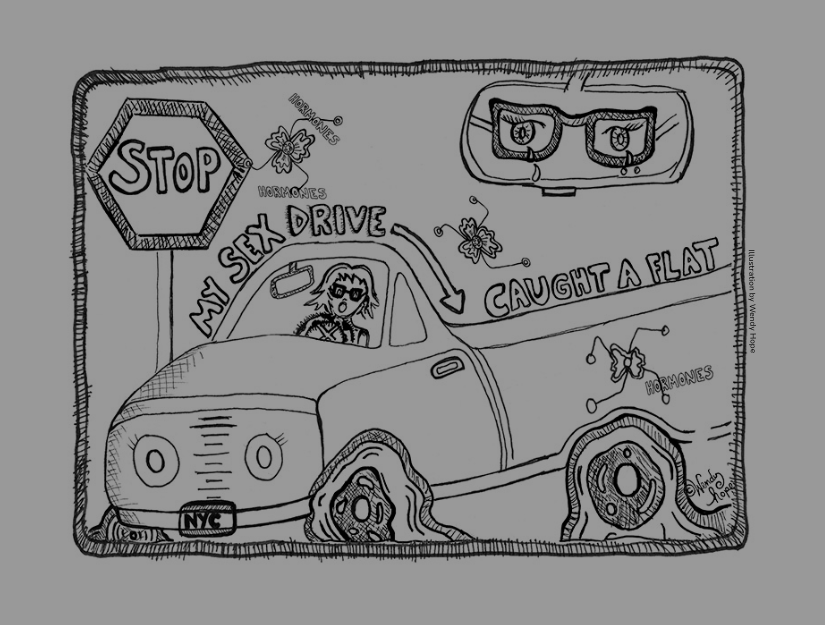
Funny Story! My very first hot flash ever happened on a hair color beauty shoot. Mid pre-production. Zero warning. One minute we’re all laughing, the next minute I’m red, sweating, and questioning my reality. My art director identified it instantly, handed me a cold towel and glass of water and calmly asked, “Is this your first?” It was indeed. At work. On a photo shoot. Of course it was.
And then it really hit. “I’m hot, I’m cold, I’m hot, I’m cold.” But never mind hot flashes! Vaginal atrophy!? Me?! My sex drive was LIVE before the pandemic! Grey pubic hairs appearing after being lasered!? What the actual fuck!? I’m so grateful for my fiancés sense of humor and patience!
I began illustrating the proverbial hormonal roller coaster and mood swings. Literally. When a stray thought makes me laugh until I cry—and then, inevitably, snort—I know it deserves to be documented. Those moments are creative gold and the perfect way to capture and share an experience, preserve a memory, or begin what might otherwise be an awkward conversation.
That impulse to illustrate it all was the fuel behind the Mini Meno Manifesto project. These are hand-drawn, original art illustrations capturing the plethora of symptoms I was (and still am) experiencing.
Running out of space on my sketch table I began folding the illustrations in half. After viewing a nice sized pile, I thought Yass! Zines! And zines were making a comeback! As it really progressed and became more cohesive, I then saw them as a collection with numbered issues, Issue 1, Issue 2 and so forth.
After millions of revisions, paper, ink pens and working titles later, I’ve crossed the finish line. The first piece of the Mini Meno Manifesto project is a “collection” of 13 zine issues illustrating the symptoms of menopause.
This set of bold, graphic black & white illustrations depict the insanely unexpected variety of symptoms in the hormonal heist we call menopause; and the tagline is “Satire, Sass and a (Smidge) of Science.”
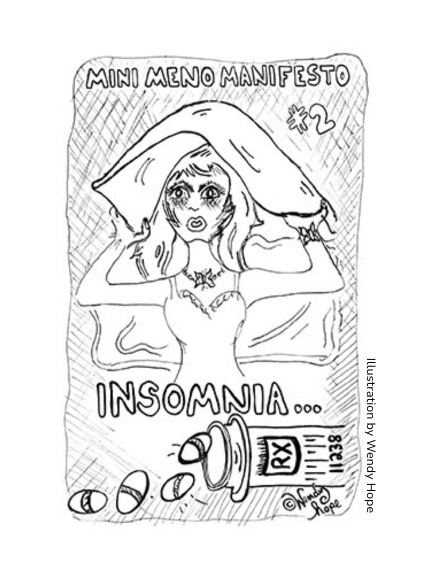
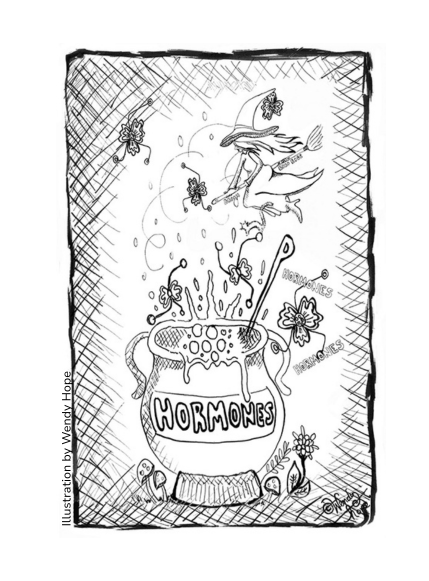

A portion of proceeds from Mini Meno Manifesto will be donated to menopause research; because although there is finally some progress, it’s still such an underfunded afterthought. At least there’s now an open and honest dialogue amongst most of the women in my life. And doctors, nurses, specialists & celebrities! We’re all relevant again! Woohoo!
What started as something to share with my fiancé, somewhere between the satirical sketches and the laughter, quickly became my authentic voice. My big picture goal is to grow out a mission-based brand and business for awareness and education. (No one warned me about anything other than hot flashes!) Next up are greeting cards and a coloring book! Keep checking back for new merch and more from the wild world of menopause moments. Let’s all laugh until we cry along the way.
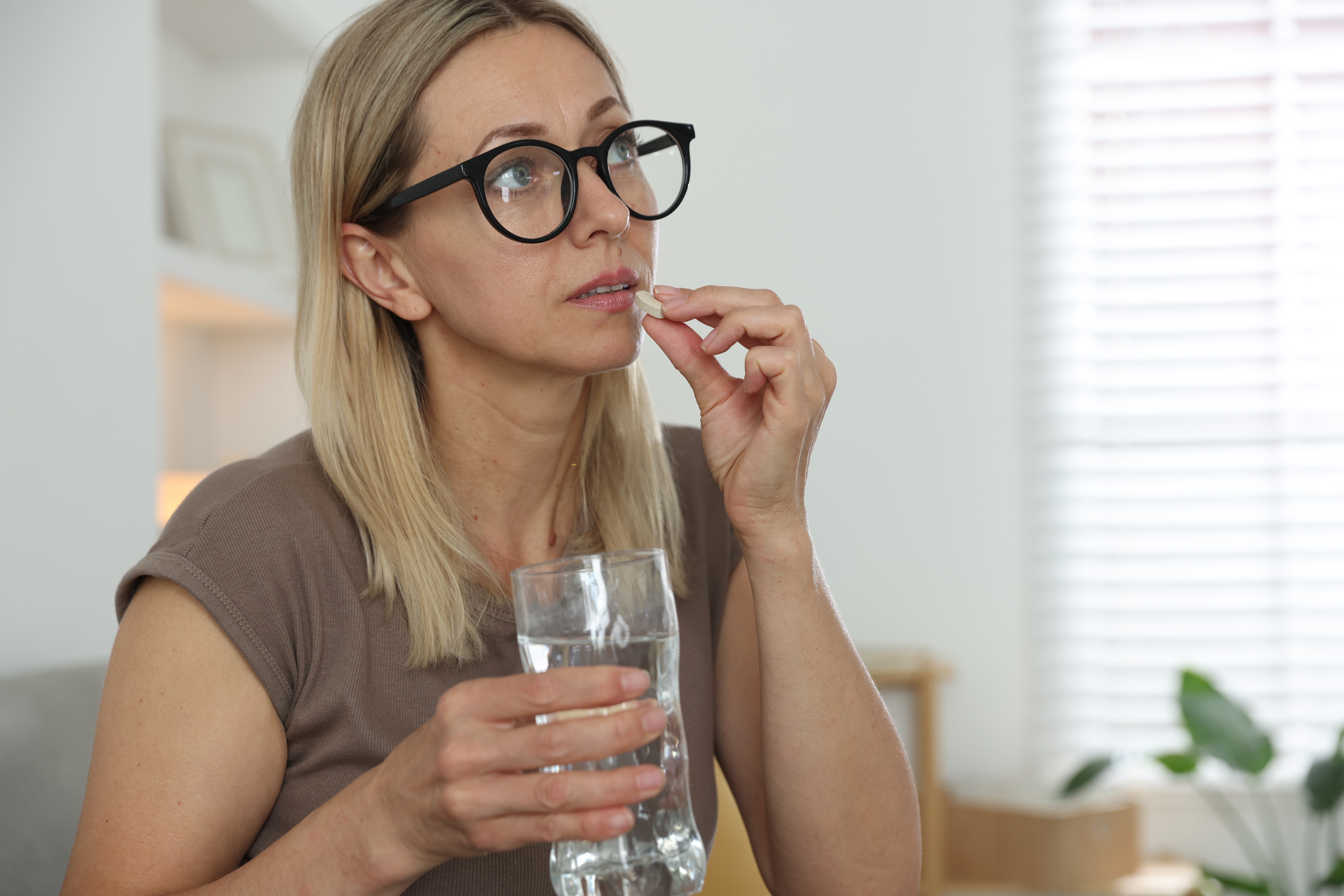
Perimenopause can feel like the great unknown. It is a phase every woman expects but few note as it arrives, partly because it can sneak up on you. Gradually, everyday changes that seem unrelated at first become persistent issues. Sleep becomes restless, moods fluctuate, and weight shifts unexpectedly. What makes this time especially difficult is how little it’s been talked about openly, leaving many women unprepared for the twists and turns ahead.
You might have heard the word mentioned in passing, or been half-heartedly handed a pamphlet and a sympathetic nod. You may begin to notice changes in how you feel, experience more anxiety, fatigue, or a sense that you aren’t quite yourself. You’re often told it’s stress, or aging, or something you just have to power through. Rarely does someone say, “This could be perimenopause. Let’s talk about it.” What you likely didn’t get is a clear, compassionate, and practical guide to what it means to live through perimenopause and come out the other side with your sanity mostly intact.
The good news is that’s changing. The perimenopause and menopause space has been growing rapidly in the last few years. There are books, movies, discussion panels, experts and social media influencers focused on how little of this process is common knowledge, and the importance of bringing it into the open.
It Sneaks Up On You
Menopause advocate and author Tamsen Fadal has been candid about how little she knew before perimenopause hit. “I had no idea what was happening to me,” she shared. “I thought I was losing my mind. No one told me this was normal.”
Fadal’s book, “How to Menopause: Take Charge of Your Health, Reclaim Your Life, and Feel Even Better than Before,” dives deep into her personal experience with perimenopause and menopause and offers insights on navigating the challenges of this phase with honesty and grace.
The Symptoms Are More Than Hot Flashes
Dr. Mary Claire Haver, an OB-GYN and menopause educator, has worked tirelessly to reframe how we talk about this phase in women’s lives. “Perimenopause is a hormonal transition. It’s not just about your period ending. It affects your brain, your gut, your mood, your metabolism.”
The list of symptoms is long and often minimized:
- Sleep disruptions
- Weight changes
- Mood swings
- Anxiety or depression
- Brain fog
- Dry skin and thinning hair
- Joint pain
You may experience some or all of these. What matters is being believed when you bring these issues up, and having access to support that goes beyond a dismissive “That’s normal.”

It’s Not a One-Size-Fits-All Experience
There’s no universal timeline. Some women spend five to ten years in perimenopause. Some women feel almost nothing, and others feel like they’re unraveling on an hourly basis. Hormone levels fluctuate, and your sense of normal changes with them. Finding a support network and a plan that works for you helps smooth the transition. Dr. Haver’s message resonates: “You deserve evidence-based care. You deserve answers. And you’re not alone.”
The Emotional Side Doesn’t Get Enough Attention
Perimenopause isn’t just a physical adjustment. It also affects your sense of self and relationships. “I started to doubt myself at work and at home,” said Fadal. “I was afraid to speak up. I second-guessed every decision.”
This internal loss of confidence is a rarely acknowledged part of a perimenopause journey. You’re still expected to show up, perform, and smile, but something feels off. For too long, women have been left to guess what’s going on inside their own bodies, while facing a societal expectation to keep these changes and concerns to themselves.
You Might Grieve. And That’s Okay
For many, perimenopause represents the closing of a door. You may not have wanted children, or you may have been childfree by choice or circumstance. The biological end to standard childbearing years can carry an emotional weight.
That’s where voices like Instagram’s Melani Sanders, aka @justbeingmelani, matter. Her series “The We Do Not Care” club” offers a refreshing, hilarious, and empowering take on aging, hormones, and living fully. Her message? You’re allowed to care deeply. You’re also allowed not to.
This phase can come with both grief and relief. You can let go of some expectations and still feel sadness for what never was. One emotion doesn’t necessarily cancel out the other.
Your Body May Feel Foreign
Dr. Haver talks often about the physical shift in body composition. “You’re not doing anything wrong. Your hormones are changing, and that has real effects on fat distribution, metabolism, and muscle mass.”
Knowing this doesn’t make it easy, but it offers a path forward. Nutrition adjustments, strength training, and sleep support can help, along with changing the narrative. This is not personal failure; it’s biology.
There Are Tools. Use Them
One of the most frustrating parts of perimenopause is how often women feel like they have to figure it out on their own. Hormone replacement therapy (HRT), supplements, lifestyle changes, and community support can all be part of your strategy.
As Fadal puts it, “We’re done whispering.” More women are sharing what works. Podcasts, books, and Instagram accounts are offering space for honesty and humor. Whether it’s tracking your symptoms with an app or joining a virtual support group, your care plan can be as personal as your experience.
You’re Not Alone
You don’t need to suffer quietly, in the way your mother or grandmother did. The silence around perimenopause is being shattered by women who are done waiting for permission to speak up. From advocates like Tamsen Fadal and Dr. Mary Claire Haver to creatives like @justbeingmelani, the message is: Talk about it. Ask questions and push back. This season of change can be both challenging and freeing.
There is a Better Path
I was among the many who felt perimenopause happening before I understood what it was. The confusion was enormous. Over time I found it helped me most to:
- Take a daily walk without distractions
- Follow experts like @drmaryclaire and @tamsenfadal
- Keep up with group chats with friends in the same phase
- Replace guilt with curiosity
- Say no without apology
None of this fixed everything, but it gave me back a sense of control.
Perimenopause isn’t a weakness; it’s a transition that deserves language, resources, and real conversation around the changes it brings to our lives.
References
- Fadal, Tamsen. Interview on The Today Show, 2023.
- Haver, Dr. Mary Claire. Menopause Matters podcast, 2022.
- Fadal, Tamsen. Instagram post, 2023.
- Instagram: @justbeingmelani, “The We Do Not Care Club” series, 2025.
- Fadal, Tamsen. How to Menopause: Take Charge of Your Health, Reclaim Your Life, and Feel Even Better than Before. Harper Collins, 2025
