Posts about living in, understanding, and finding the best of mavenhood.
The Digital Magazine

After skincare, microneedling, peels, and shorter downtime collagen treatments, there’s another, more intense category of in-office procedures: lasers, tightening procedures, biostimulatory injectables, and deeper resurfacing treatments. In case you missed them, we looked at Collagen Basics for Midlife Women and Collagen Boosters for Midlife Women in earlier posts.
There are options that focus on gradual collagen rebuilding, and more aggressive choices that remodel collagen through resurfacing. Here, provider selection matters almost as much as setting realistic treatment goals. Working with a board certified provider with demonstrated experience in the specific procedure you’re considering, in an office that strictly adheres to all sterility and safety standards, significantly decreases the risks involved and impacts results. As with everything in this series, the right mix is personal, and most advanced in-office procedures involve a significant investment of time, recovery, and money.
Fractional Lasers
Fractional lasers create controlled injuries underneath the skin while leaving surrounding tissue intact. Collagen remodeling begins as the skin heals, leading to improvement in fine lines, acne scarring, texture changes, enlarged pores, and firmness.
Within fractional lasers, there are two major categories: non ablative and ablative. Non ablative fractional lasers heat deeper layers of skin while leaving more of the skin’s surface intact, usually resulting in shorter recovery times and more gradual collagen stimulation. Ablative fractional lasers remove portions of the skin’s surface and generally involve more downtime, redness, peeling, and recovery in exchange for stronger resurfacing and collagen remodeling.
Fraxel remains one of the most recognizable names in fractional laser treatments, although competing technologies including Clear + Brilliant, MOXI, Halo, and various fractional CO2 laser systems are also popular.
Certain lasers and resurfacing procedures may not be appropriate for every skin tone or melasma history, which is part of why treatment selection and provider experience matter.
Exosome Therapy
Exosomes are an emerging option, marketed as an add-on for supporting skin recovery, collagen production, and healing after treatments like lasers and microneedling.
Exosomes are typically applied topically immediately after procedures that create controlled skin injury, allowing the skin to absorb them during the healing process. Some providers also use injections depending on the treatment plan. Since exosome therapy is still a newer category, approaches and products vary widely between providers. As of this publish date, exosomes have not been approved for aesthetic use by the FDA.
Pico Lasers
Pico lasers use ultra short pulses of energy to stimulate collagen production and target a range of skin concerns including pigmentation, melasma, acne scarring, uneven skin tone, and overall skin rejuvenation. Many pico laser approaches focus on cumulative collagen support through repeated lower intensity sessions. Compared to older lasers, this option creates less overall heat injury.
Pico laser systems are marketed around shorter downtime per session and gradual improvement. Some popular options are PicoSure, PicoWay, and Pico Genesis.
Skin Tightening Treatments
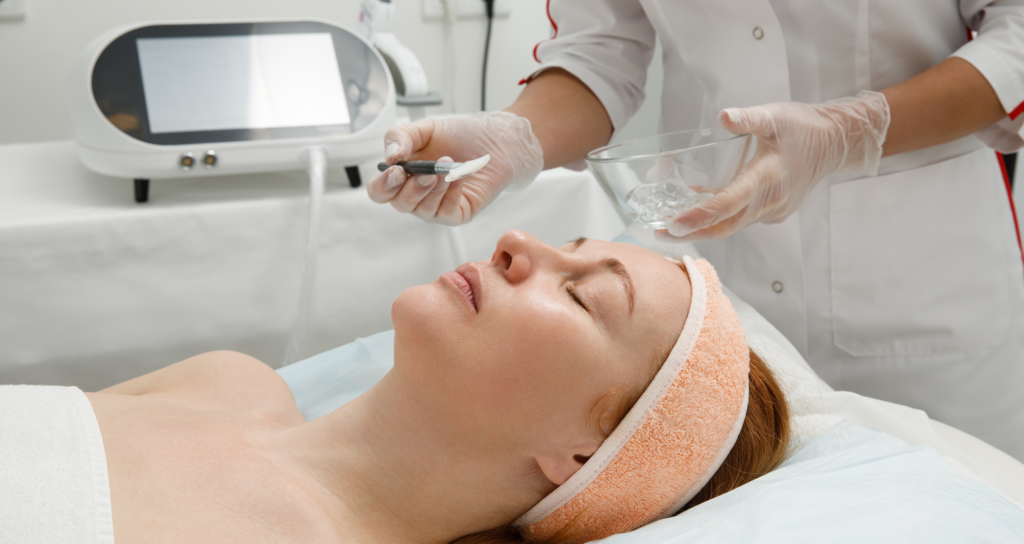
Collagen loss in midlife often appears through skin laxity and changes in firmness around the jawline, neck, cheeks, and lower face.
Ultherapy uses ultrasound energy, while Thermage, Sofwave, and many radiofrequency-based treatments use heat energy to stimulate collagen production beneath the surface of the skin. These procedures target skin laxity and offer tightening support.
Unlike resurfacing lasers, tightening treatments work beneath the skin’s surface to stimulate gradual collagen rebuilding. Results typically develop slowly over several months as new collagen forms, and recovery varies depending on the procedure. Some treatments involve swelling, tenderness, or temporary numbness for several days, and others have almost no visible downtime. Multiple sessions may be recommended depending on the goals of the treatment plan.
Biostimulatory Injectables
Biostimulatory injectables work differently than traditional fillers. Instead of primarily adding immediate volume, these injectables are designed to stimulate collagen production over time.
The most widely used biostimulatory injectables are Sculptra and Radiesse, both used for gradual facial volume support, collagen stimulation, and structural support.
Results from biostimulatory injectables usually develop gradually over several months as collagen production increases. These treatments are often discussed when midlife facial thinning, volume loss, and jawline or structural aging come into play.
CO2 Lasers + Deep Resurfacing
CO2 lasers and deeper resurfacing treatments are some of the most aggressive collagen remodeling procedures currently available. These treatments injure the skin to trigger significant collagen remodeling in healing.
Fully ablative CO2 lasers remove layers of skin more aggressively, and fractional CO2 lasers leave portions of surrounding tissue intact to support faster healing. Recovery may include redness, swelling, peeling, skin sensitivity, and social downtime lasting days or weeks, depending on the depth and intensity of treatment.
Putting It All Together
For many women in mavenhood, advanced collagen treatments become part of maintaining skin quality, confidence, and liking what you see in the mirror. The right combination of treatments, skincare, nutrition, and maintenance looks different for everyone.
“By combining targeted skincare, procedural treatments, nutritional support, and, when appropriate, hormone-based therapies, we can meaningfully support collagen production, slow its breakdown, and improve skin strength and resilience.”– Dr. Amy Hayes, Alloy Women’sHealth, a commercial telehealth platform.
The collagen conversation covers a lot of ground: nutrition, supplements, medical grade skincare, plus a range of sophisticated in-office procedures of varying degrees of intensity. Taken together, they represent a genuinely new era of options for women in mavenhood and beyond. Collagen counts.
This series is intended for informational purposes only and is not medical advice. Treatments, supplements, skincare products, and procedures affect everyone differently. Consult a qualified healthcare provider or dermatologist before making changes to your healthcare, skincare, or wellness routine.
Estimated reading time: 5 minutes
Building on the foundation of collagen-supportive nutrition and supplements, the next phase of collagen support focuses on treatments designed to directly boost collagen production. If you missed it, we cover the basics in Collagen Basics for Midlife Women.
The options for collagen-boosting treatments have expanded significantly, giving midlife women more choices than ever before. Understanding what each treatment can and can’t do is the first step toward making the right decisions for your skin and your goals.
Collagen boosting treatments work gradually by triggering the skin’s natural repair response and encouraging new collagen growth over time. Treatments focus on skin texture, brightness, firmness, elasticity, discoloration, fine lines, or some combination of these concerns. The right choice often depends on individual goals, budget, recovery time, skin tone, age, and how aggressive a treatment plan you and your doctor decide makes sense.
Disclosure: This post contains some affiliate links. As an Amazon Associate, we earn from qualifying purchases.
Microneedling
Microneedling, sometimes referred to as collagen induction therapy, uses tiny needles to create controlled micro-injuries in the skin, triggering the body’s healing response and encouraging collagen production. The end goal for a microneedling treatment is a refreshed, smoother look.
The different types of microneedling and add-ons address various goals, from fine lines and texture changes to mild acne scarring, enlarged pores, and overall skin dullness. Radiofrequency microneedling, including popular treatments like Morpheus8, adds heat delivery through the needles. The heat helps target deeper layers of tissue and is often used for deeper wrinkles, acne scarring, and firmness. Recovery can be more noticeable than standard microneedling, with several days of redness, swelling, and sensitivity after treatment.
Microneedling Add-Ons
A popular add-on is platelet rich plasma, often called PRP. Since PRP uses components of a patient’s own blood applied during or after treatment, it became known in its early days as the “vampire facial.” Now commonly referred to as PRP microneedling, its purpose is to support the skin’s healing and recovery process. Some providers also offer a newer variation, platelet rich fibrin, known as PRF. Using a slower processing method, PRF is marketed as providing longer lasting support for healing and collagen rebuilding.
Some women use at home dermarollers or microneedling devices between professional treatments. Professional microneedling reaches deeper layers of the skin and involves different levels of precision, sterility, numbing, and recovery time, while at home devices are designed for more superficial use.
It goes without saying, but working with a professional who follows all sterility and safety standards significantly decreases the risks involved with any procedure or recommendation.
Chemical Peels
Chemical peels work by exfoliating the outer layers of skin and encouraging faster cell turnover. Depending on the strength and style of the selected peel, a treatment might target discoloration, uneven texture, acne scarring, fine lines, dullness, and/or sun damage. The goal of a peel might be skin maintenance, brightness or better texture.
Peels achieve targeted results by using different acids for different goals. Commonly, glycolic acid and lactic acid are for brightness and texture, while salicylic acid is applied for acne and congestion. Jessner and TCA peels work at deeper levels of the skin and are used for more noticeable resurfacing. For clarity, “light” peels typically involve minimal visible peeling and very little downtime, while “deeper” peels can require more recovery time and aftercare.

LED Light Therapy
LED light therapy has become increasingly common. Different wavelengths of light are used for different concerns, with red light therapy associated with collagen support and lowering inflammation. Blue light therapy is commonly used for acne.
Unlike more aggressive treatments, LED therapy usually involves little to no downtime and results tend to build gradually with consistency over time. We explored red light therapy in depth in The Science of Red Light Therapy for Skin earlier this year.
Medical Grade Skincare
Medical grade skincare is its own category of collagen support, with ingredients specifically formulated to encourage collagen production and skin renewal.
Collagen sheet masks, hydrogel masks, overnight masks, and other collagen focused topical treatments have become very popular. Products like the Biodance Bio Collagen Real Deep Mask, and Augustinus Bader’s Hydrogel Face Mask show up repeatedly across skincare conversations and social media. While these products can’t replace lost collagen, many women use them for hydration, temporary plumping, and overall skin glow. They’re also commonly used as part of self-care routines before events, after travel, during drier weather, or simply as a midweek skin refresher.
Retinoids remain one of the most commonly recommended topical ingredients for collagen support. Derived from vitamin A, they work by increasing cell turnover and stimulating collagen production. Over the counter retinols and retinal products are often introduced gradually, while prescription retinoid favorites like tretinoin are considered a strong addition to a skincare routine.
“Retinoids are one of the only molecules proven to increase collagen production.” – Dr. Freya Meyer, MD, FAAD, PHDermatology.
Beyond Retinoids
Vitamin C plays a direct role in the body’s natural collagen synthesis, making it one of the most valuable supporting ingredients in a collagen-focused skincare routine. It also provides antioxidant protection against environmental stressors that contribute to collagen breakdown over time.
Daily SPF also plays a major role in protecting collagen over time. UV exposure accelerates collagen breakdown and contributes to fine lines, uneven texture, discoloration, and loss of elasticity, making sun protection one of the most important players in the long-term collagen support list.
Peptides are chains of amino acids that signal the skin to support collagen rebuilding and repair. They show up in serums and moisturizers aimed at firmness and skin support, and work well alongside retinoids and vitamin C.
Exfoliating acids are used to encourage cell turnover, support overall skin renewal, and help other collagen-supporting ingredients penetrate the skin more effectively. Some women tolerate regular exfoliation well, while others need a slower, more limited approach, particularly during menopause when skin can become drier and more reactive.
Medical grade skincare stands on its own as a collagen strategy. Products can be introduced gradually, adjusted based on budget and sensitivity, and tailored to what your skin responds to best.
Finding the Right Mix
For many women in mavenhood, collagen boosting treatments become part of maintaining skin quality, confidence, and liking what you see in the mirror. The right mix of nutrition, supplements, treatments, and at home maintenance looks different for everyone.
There are also frequent technological advances in this area. In addition to all we’ve looked at here, there are sophisticated in-office procedures that can work as part of a long term skincare strategy. We look at more options in Advanced Collagen Boosters for Midlife.
This series is intended for informational purposes only and is not medical advice. Treatments, supplements, skincare products, and procedures affect everyone differently. Consult a qualified healthcare provider or dermatologist before making changes to your healthcare, skincare, or wellness routine.
Estimated reading time: 6 minutes