Posts about living in, understanding, and finding the best of mavenhood.
The Digital Magazine


Three unexpected steps for women navigating a major life transition
There was a point in my life when I found myself emotionally exhausted, financially depleted, and trying to survive the aftermath of a divorce. I remember sitting alone and thinking honestly and painfully: How did I get myself here?
Not just emotionally, but financially.
I was educated. I came from a family that valued hard work, sacrifice, and financial discipline. I had opportunities. I was capable. So why wasn’t any of that translating into a different kind of life? Why was I starting over from negative dollars…again? Why did I continue making decisions that left me feeling small, financially insecure, and disconnected from the kind of life I actually wanted?
Like many people shaped by trauma, I spent much of my life making decisions focused on survival and the present moment, not my long-term future. And I realized something even deeper: I had spent so much time adapting to everyone else’s needs that I never truly stopped to ask myself what kind of life I wanted for me.
The Stories Behind Our Decisions
The answer didn’t come all at once. It was the start of a slow, oftentimes, painful unraveling. What I eventually realized was that many of the decisions I had made throughout my life were happening through the lens of stories I didn’t even realize I was carrying.
• The “good immigrant daughter” story: work hard, be grateful, don’t ask for too much.
• The eldest sister story: be responsible, take care of everyone else first.
• The starving artist narrative: passion matters more than financial security.
• The quiet, supportive spouse: keep the peace, minimize your needs.
• And the version of me that learned surviving felt safer than speaking up.
Over time, those stories quietly shaped the way I viewed money, worth, risk, success, independence, and even what I believed I deserved. They also shaped the beliefs underneath many of my financial decisions:
• Asking for too much is selfish.
• Security matters more than joy.
• Love sometimes means self-sacrifice, even to the point of self-harm
These stories weren’t random. They were shaped by my upbringing, my culture, my lived experiences, and the environment I grew up in. And without realizing it, they quietly shaped the way I moved through the world.
That’s why I believe money often becomes emotionally loaded during major life transitions.

Why Transitions Make Money Feel So Emotional
A divorce. The loss of a loved one. Children leaving home. A layoff. A health scare. Or simply realizing that the life we imagined looks different than the life we are living.
These moments don’t just disrupt our routines. They force us to confront ourselves. And somewhere in the middle of all of it, money suddenly becomes very loud.
Am I okay?
Do I have enough?
What happens next?
Why does this all feel so overwhelming?
Why do I feel so alone?
Why do I feel so behind?
What is wrong with me?
As a financial advisor, I’ve worked with many midlife women navigating these exact moments. And one thing I’ve learned is this: what looks like a money problem is often also an emotional story.
Sometimes our financial behaviors make perfect sense in the context of our lived experiences. Avoiding finances may have once protected you from anxiety. Over-giving may have helped you feel loved or needed. Staying financially dependent may have once felt safer than risking failure. Constant comparison may come from fear that everyone else received a map you somehow missed.
That’s why money can become emotionally charged in ways we don’t fully recognize until much later. And often, those patterns don’t fully reveal themselves until life suddenly changes.
When Financial Patterns Rise to the Surface
A divorce may suddenly expose fears around security or independence. Widowhood can force someone into financial decisions they never previously had to navigate alone. An empty nest may create space for long-avoided questions about identity or purpose. And, career transitions often bring up fears around stability, survival, or whether we are even “allowed” to want more.
In these moments, many women quietly turn fear into self-judgment.
“I’m bad with money.”
“I should already know this.”
“Everyone else seems more confident than I am.”
But how could we know the things we were never taught? That realization changed the way I looked at money and, honestly, the way I looked at myself. I truly don’t think most people are bad with money. I think many of us are carrying emotional patterns that once helped us survive.
So get out a pen and paper. Take out your journal. Because I truly want you to start putting thoughts on paper.
3 Things to Start With
Here are three things I wish more women knew when rebuilding financially (and emotionally) after a major life change.
1. Get curious before you judge yourself
Before budgets, spreadsheets, or investment strategies. Before asking, “What’s the next financial move I should make?” I think the first step is awareness.
Some women immediately jump into tactics first: what to invest in, what accounts to open, how much they should save, whether they should downsize, or how quickly they need to “get back on track.” Others immediately start criticizing themselves.
But I think there’s a more important question to ask:
What patterns, beliefs, or fears may have shaped the decisions that brought me here today?
This isn’t about shame or blame. It’s about awareness. What kinds of patterns have you quietly repeated for years?
For me, part of my answer was not speaking up for fear of punishment, whether real or imagined.
Do you avoid looking at money? Do you over-give? Do you spend money to self-soothe? Do you save at the expense of present joy? How have these patterns shaped your life over the years? How have they helped you? And how have they hurt you?
Most importantly:
What would a healthier relationship with money actually look like for you?
There is a difference between judging ourselves and understanding ourselves. And understanding ourselves is where change begins.

2. Put the facts on paper
When we feel overwhelmed, our brains often make things feel bigger, scarier, and more impossible than they really are. One of the most grounding things you can do during a transition is give yourself clarity. Clarity reduces overwhelm.
So start putting pen to paper. You do not need perfect answers. You just need a place to begin.
What streams of income are coming in?
What expenses are going out?
Where are all your accounts?
Can you access them?
What debts exist?
What are the interest rates?
Are your beneficiaries updated?
Do your will, insurance policies, and estate documents still reflect your current life?
I can’t tell you how many women I meet who genuinely do not know where all of their money is, what accounts exist, or whether they can even log into them. So if this is you, you are not alone. But let this be the moment you begin taking ownership.
The goal is not perfection. It’s visibility. Because we can’t make informed decisions from avoidance or vagueness.
3. Stop trying to do this alone
One of the biggest misconceptions I see is the belief that strength means figuring everything out by yourself.
I actually think the “Women Who Do It All” archetype has left many women feeling like asking for help is weakness. It isn’t. Some of the strongest and most successful people I know are the ones willing to ask for support and build a team around them.
Transitions often require what I call a “board of advisors.” Not one magical person who does everything, but trusted people who can support different parts of your life. This may include:
• A financial advisor
• A tax professional
• An attorney
• A therapist
• A coach
• A trusted friend or community
Money decisions are rarely just financial decisions. They are woven with emotion, identity, values, family dynamics, fear, hope, and lived experience. And you deserve support while navigating them.
Rebuilding Trust in Yourself
Looking back, I no longer ask, “How did I get myself here?” with shame. Today, I ask with curiosity and compassion. And, the answer wasn’t that I was irresponsible or broken. But, that I was making decisions through the lens of stories I had never stopped to examine. And even now, I continue to ask myself whether I’m making decisions from old survival patterns or from the life I am trying to create.
It’s not a question I answered once during my divorce. It’s a practice. One I return to again and again as I continue to build a life that feels more aligned, intentional, and true to who I want to be.
Sometimes the most important work we do around money is not just growing wealth. It’s rebuilding trust in ourselves. It’s learning that awareness is not evidence that we are failing, but evidence that we are finally beginning to see ourselves more clearly.
And maybe that’s part of what life transitions are really asking of us: not perfection, but honesty. The willingness to examine the stories we inherited, the patterns we repeated, and the life we want to create moving forward with greater awareness and intention.
Estimated reading time: 8 minutes
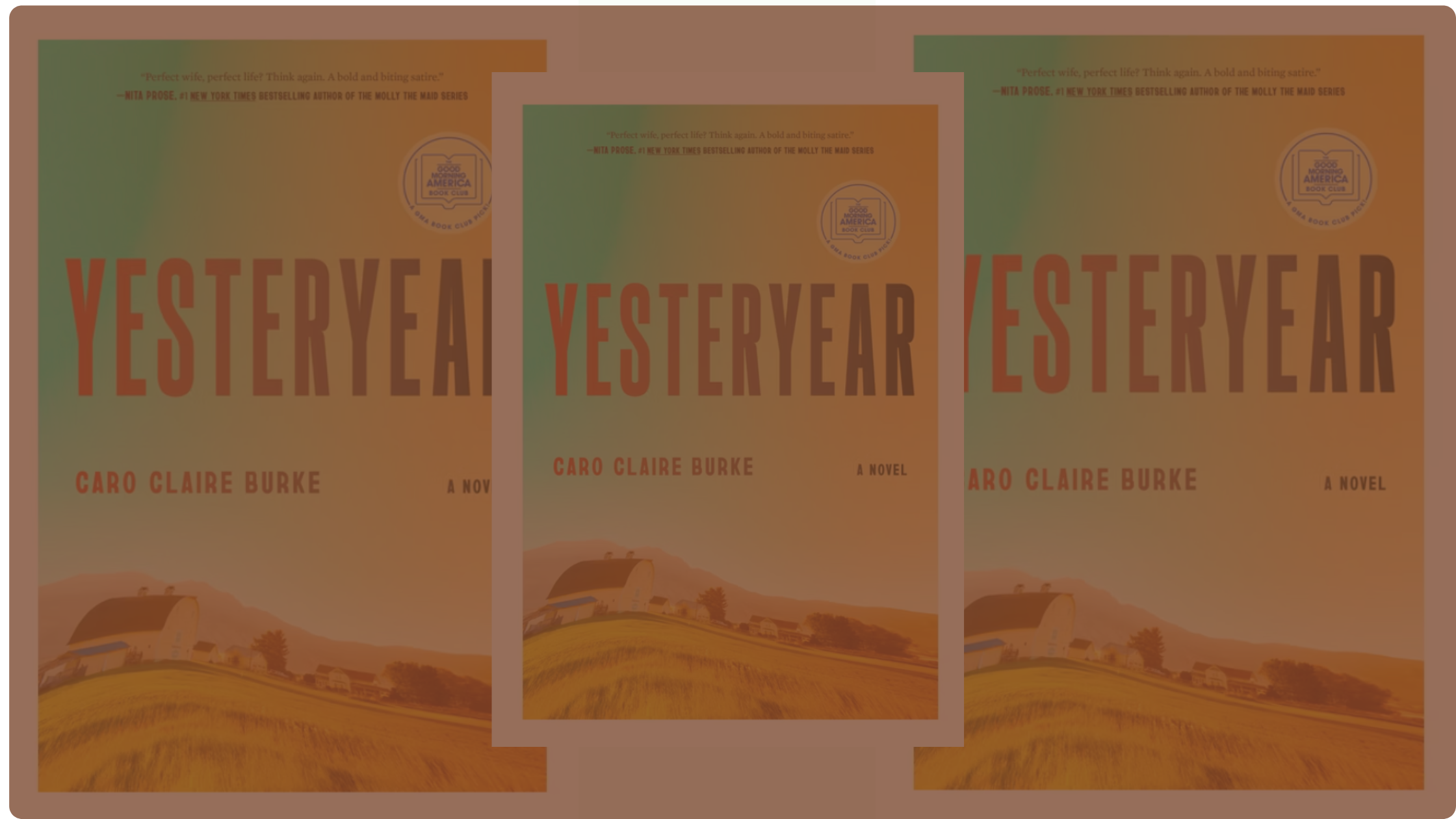
Yesteryear by Caro Claire Burke was published in April, 2026, and has already become a runaway hit. The book generated significant buzz before publication, and library waitlists have grown so long that the earliest availability in some formats stretches into 2027.
Depending on the reader, the book is deep or not so deep, with flawed characters that feel familiar or completely unrealistic. Even without giving away any plot twists, there’s plenty to unpack in this story.
The novel centers on a young woman named Natalie and her life on a farm called Yesteryear. Natalie’s inner dialogue forms the backbone of the story, and she isn’t naturally kind, good, or any of the other qualities we often like to assign to a protagonist. Her internal voice and public persona are frequently at odds. More than once, she reminds herself to behave better by asking what her carefully curated online alter ego, “Online Natalie,” would do.
The first story upset comes when we find Natalie confused and disoriented, living in an earlier, shabbier timeline than the one she’s comfortable in. Or perhaps coddled is the more appropriate word.
As we get into the book, we’re not quite sure if the ramshackle version of Yesteryear is a fever dream, a television show, or some kind of elaborate practical joke, and readers can choose to focus on whichever explanation seems most likely. For me, this was important, but secondary.
The clear, honest, and often mean-spirited inner dialogue of an unabashed climber was far more interesting. Natalie is smart, sharp, and quick. It is never entirely clear where these traits came from, as nearly everyone around her seems content with, well, less. Less ambition, less curiosity, or any real interest in something beyond the life already mapped out for them.
What makes Natalie interesting is that in the real world, meaning in person rather than online, she doesn’t pretend to be any better than she is. Her flaws are on full display, and so are her ambitions. The more I thought about her, the more I questioned whether readers were reacting to her behavior or to her honesty about it. Many fictional characters possess the same flaws, and very few are willing to narrate them so openly.

We discussed the book in book club, and one common thread of conversation was how deeply unlikeable many readers found the characters. Words like vile, morally bankrupt, selfish, and lost came up more than once. What struck me was not the criticism itself, but where it was directed. Many of these same descriptors are often aimed at childless women. In this case, readers were applying them to a woman who presented herself as a devoted wife and mother.
I don’t support name-calling, even when the shoe fits. What interested me was how quickly readers reached for labels that are so often aimed at childless women. The discussion was a reminder that selfishness, ambition, confusion, and poor judgment belong to the human condition, not to any particular life choice.
I’ve been asking everyone: Would you want to live in another era? Which one, and who would you want to be while you’re there? In conversation, I sometimes limit the experience to a week, a month, or a year.
Here’s where Yesteryear really offers food for thought beyond the typical parameters of the storyline. Natalie’s mostly miserable inner dialogue during her time in a bygone era raises a question: Where would we be willing to sacrifice our modern conveniences to experience the moments in history we’re most drawn to?
Bathing keeps coming up somehow. It turns out many of us are fascinated by history right up until we’re asked to give up hot water. One person wanted to experience the decadence of Versailles alongside “Let them eat cake” Marie Antoinette, until the reality of 18th century hygiene entered the conversation. Midlife is definitely inclusive of beautifully scented oils and creams, hot showers, and nighttime routines.
The most surprising answer, or perhaps not, was how many women chose the era of Gertrude Stein. More than one person wanted to spend time in 1920s Paris with Stein, surrounded by the artists and writers who attended her evening salons. Henri Matisse, Pablo Picasso, Ernest Hemingway, and F. Scott Fitzgerald all made the guest list. It’s likely not a coincidence the most frequently chosen era was defined by a trailblazer who lived outside of conventional roles and was celebrated for it.
There are lots of reviews and discussions of Yesteryear out there already, but don’t let my focus on something beyond the storyline dissuade you from reading it. The book is well worth the time.
Caro Claire Burke is a strong writer, and nothing about this novel screamed debut. Read it for yourself. As our book club made clear, what you take from Yesteryear depends entirely on what you bring to it. That may be the most honest thing you can say about a book worth reading.
If you decide to pick up a copy and use any link in this post, I may earn a small commission as an Amazon Associate.