Posts about living in, understanding, and finding the best of mavenhood.
The Digital Magazine

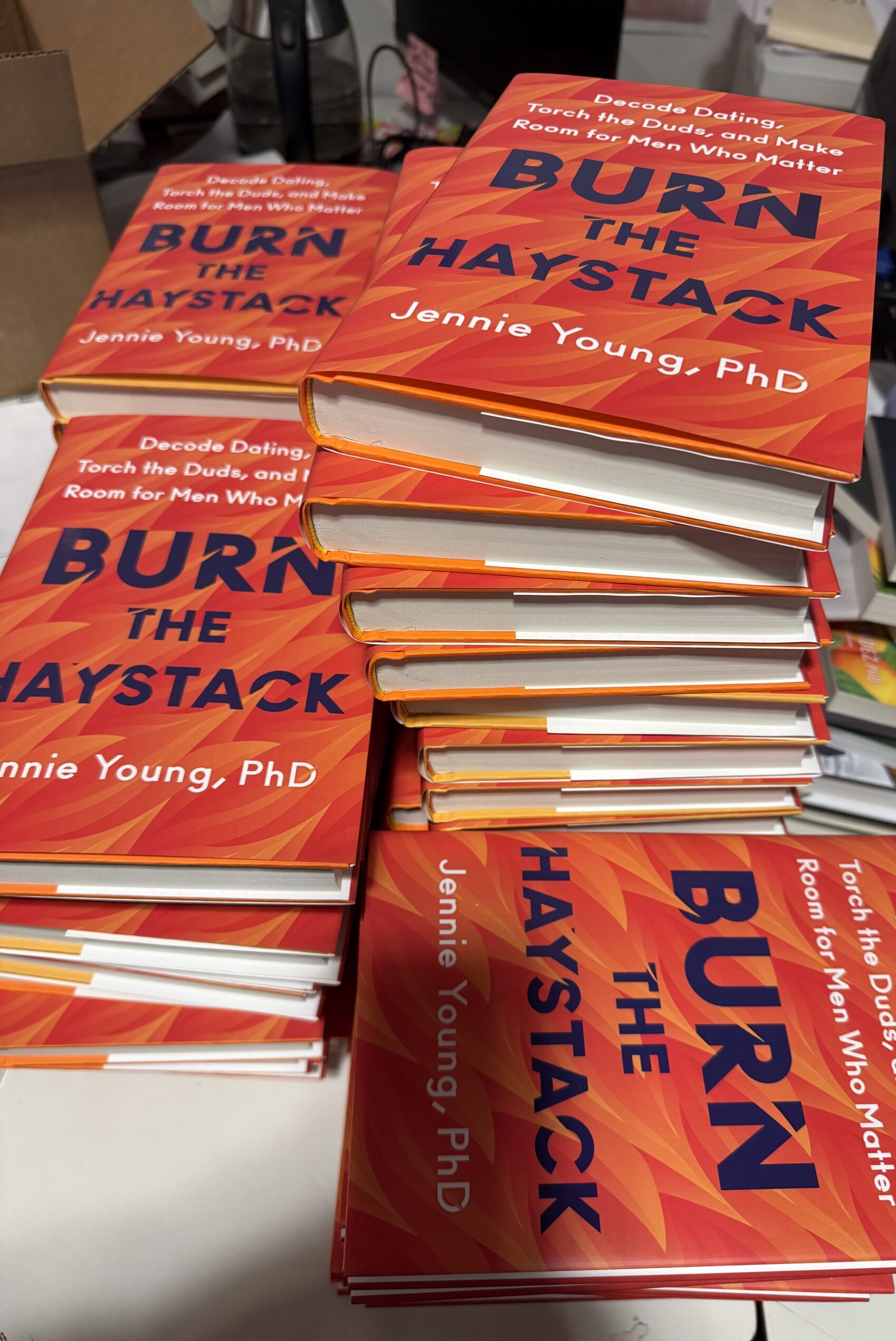
Most traditional dating advice recycles the same message: stay open, give people a chance, and look for diamonds in the rough. Burn the Haystack by Jennie Young, PhD takes a different approach to dating, especially for women navigating dating in midlife, built around protecting your time, peace, and sanity.
Disclosure: This post contains affiliate links. If you buy something through these links, we may receive small commissions that support this site. As an Amazon Associate, we earn from qualifying purchases.
Young, a professor of writing and rhetoric, is sharp and funny, with a communication style that makes dense language and complex ideas easy to follow. She uses a metaphor to describe how dating works: a long-term partner is a needle, and the online dating pool is a haystack. If you’re looking for a needle in a haystack, it makes sense to burn the haystack to find it. In specifically looking for your needle, there may be a lot of metaphorical hay to burn.
The Burned Haystack Dating Method® has been tested and refined in a private Facebook group where it’s discussed daily. I’ve been part of that group for about two years, and watching these patterns play out across a community of women made it clear the book would be popular before it hit the shelves.
Burn the Haystack builds on the dating method’s foundation, using examples of the patterns Young identifies and walking through each concept in depth. Since algorithms will reintroduce someone you swiped left on, blocking matches that aren’t a fit is part of saving your own time and energy. Block to burn, or B2B, is the online version of burning the haystack. B2B is a key component of the Burned Haystack Dating Method® and central to its methodology.
Young breaks down the most common profile types using critical discourse analysis, applying her expertise to decode language that often hides more than it says. She highlights how phrases that look harmless often carry clearer signals once you slow down and read them closely. “Just ask” signals low effort and an expectation that someone else (you) will do the work. She also describes the very common “My kids come first” as deceptively positive. Since there’s already a baseline expectation that children are important, adding “first” implies you would always be vying for second place.

Reading profiles this way changes everything; what used to feel like a gut reaction you couldn’t quite put your finger on becomes something you can actually see and articulate. You move through the selection process faster, with more confidence and far less second-guessing. In the 33 rhetorical patterns Young breaks down, it becomes clear how chaotic the dating pool actually is, especially if you haven’t been on dating apps in a while.
Aside from reading profiles carefully for what’s behind them, Young suggests being honest with yourself about what works for you. For example, if you’re scared of heights, this should be included in how you assess matches. It doesn’t matter how cute the mountain climber is if you’re not interested in climbing or in a long-term partner who spends his time doing that.
For women in mavenhood, the midlife stage where childless, childfree, and empty nester women refocus on themselves, this dating approach works particularly well. The dating pool is more complex, expectations can be unclear, and time isn’t always viewed in the same way. Potential holds less weight, and what’s actually there in terms of character, personality, and lifestyle matters more.
When you do swipe right and match, the next level of CDA (critical discourse analysis) comes into play in how each match interacts, asks questions, and moves forward. Young talks about pen pals, flags behavior that signals controlling tendencies, and calls out men who expect unconditional love in exchange for less than the bare minimum.
There’s also a level of discipline to this method that doesn’t get talked about as much. Trust what you’re seeing the first time, without adding to it or softening it. It means not going back, not revisiting a profile to see if you read it too quickly, and not giving a conversation more time than it deserves. For many women, this means unlearning what they’ve been taught to accept over decades: the instinct to give the benefit of the doubt, to be generous with second chances, and to shrink their own needs to make room for possibility. Making different decisions in dating starts with recognizing those patterns in yourself.
As this practice continues to gain popularity, the approach has already expanded beyond dating. At the book launch in New York, one woman described how decoding job descriptions led her to her ideal role, proof that reading language critically and trusting what you find changes more than your love life. Looking at dating, or any online communication, from this perspective feels refreshing. Everyone I’ve spoken to about it wants to hear more. It turns out a book about reading dating profiles is really a book about reading people.

Dating when you love your life as it is brings a mix of excitement and unease. A full life can feel satisfying, and still leave room for companionship. Wanting connection doesn’t take anything away from what you have built. It means partnership still matters, even when your world functions well on its own. The desire for a partner can feel complicated because dating again introduces both possibility and risk.
Reentering the dating world takes nerve. It pulls you into a place where intentions shift, charm can fade, and conversations take unexpected turns. Profiles may stretch the truth, and messaging can start strong and disappear without explanation. Anyone who has dated in midlife, or just dated, knows how unpredictable the process is, and how quickly optimism can turn into confusion.
A More Realistic Place to Begin
Dating at this stage works best with clear eyes. There’s no need to pretend the landscape is smooth. Understanding its unevenness adds steadiness to your approach, and that clarity can help you move through each interaction without inflation or dread. Keeping the focus on what feels right saves time and energy in the long run.
A conversation might feel one-sided, a date might be awkward from the start, or someone might vanish after enthusiasm that seemed genuine. These moments reveal preference more than failure. They also help clarify what energizes you versus what drains you.
The Effort Behind the Choice
Trying again requires emotional effort. Updating a profile, replying to a message, or walking into a first date takes more stamina than people assume. Each step can feel like work, even when the hope is real. Continuing in a space that doesn’t always reward effort deserves respect.
Support can make the process easier, especially after time away. Professionals can help refine photos, shape prompts, and guide you toward better matches. Some offer insight on spotting red flags, navigating early conversations, and avoiding wasted time. Their experience brings direction to an environment that can feel chaotic.

Where People Are Meeting Now
Many midlife daters use online platforms at some point, even if introductions through friends or your community are available. The apps are part of the landscape, and understanding how each one works can help you move through them with more confidence.
Bumble
A good choice for women who want more control over who reaches out to them. Only women can start conversations, reducing unwanted contact and setting a different tone. Profiles are simple to browse, and the overall feel is modern and approachable.
Match
A long-running platform geared toward adults seeking committed relationships. Profiles allow more detail, and the search tools help with filtering. Many midlife daters appreciate its slower pace and clearer information.
Hinge
Built around prompt-based profiles intended to spark conversation. This platform attracts people seeking genuine interaction without the frantic energy of endless swiping.
Trying more than one platform can help you find the environment that feels natural and reflects the kind of connection you want.
Getting Better at the Online Side
Jennie Young’s Burned Haystack Dating Method offers a studied approach to evaluating potential partners. In her popular Facebook group, she helps potential daters identify patterns in profile jargon and early interactions. She shares tools for assessing how people present themselves, how they communicate, and how their behavior aligns with what they say they want, making compatibility easier to see.
The method includes a community space where daters compare notes, interpret confusing interactions, and point out signs that are easy to overlook when you’re searching alone. It adds structure to an environment that often feels disorganized and helps you make decisions with more confidence.
Bringing Back Real-Life Moments
It’s still possible to meet people in real life instead of online. Influencer Laurie Cooper offers a “Sit at the Bar September” approach works year-round and creates simple in-person opportunities. Sitting alone at a bar signals openness without forcing interaction. It invites casual conversation, eye contact, and small exchanges that rarely happen when you’re tucked away at a table or rushing home.
This approach encourages presence and curiosity. It gives you a way to step into the world with intention, look up from your phone, and create space for old-school, face-to-face moments. Keeping an open mind helps, since unexpected conversations unfold when you appear approachable and engaged with your surroundings.

Keeping Your Life Balanced
A full life remains intact while you explore dating. Boundaries help protect both time and energy. Pacing dates to one per week or spacing out conversations can help keep dating from becoming overwhelming. Married or long-term partnered friends can also be helpful, since many enjoy hearing the stories, offering perspective, and acting as sounding boards when things become confusing or unexpectedly funny.
Experience sharpens your instincts. Follow-through shows reliability, and respect for time shows consideration. Clear communication reduces guesswork, and progressing at a comfortable pace leaves room to get to know someone without pressure. These qualities and patterns make dating easier to navigate and help you stay aligned with your own expectations.
When Something Real Starts to Take Shape
Loving the life you have makes it easier to read the signals. You notice who brings ease, who makes you laugh, who asks genuine questions, and who drains the room the moment they speak. That awareness becomes useful quickly.
A promising connection can add a spark to your week without taking it over. It brings conversation that feels natural and interest that grows at a pace that fits your life.
Dating with your life already in motion can be enjoyable and fun. The right match usually brings curiosity, humor, and space to breathe, which supports dating when you love your life as it is.
Choosing Connection On Your Terms
Choosing to date when your life already feels good takes courage. Partnership can have a place in a life shaped by independent friendships, work, and personal growth. Staying open to connection allows for adding something grounded, meaningful, and just right for you.
