Posts about living in, understanding, and finding the best of mavenhood.
The Digital Magazine

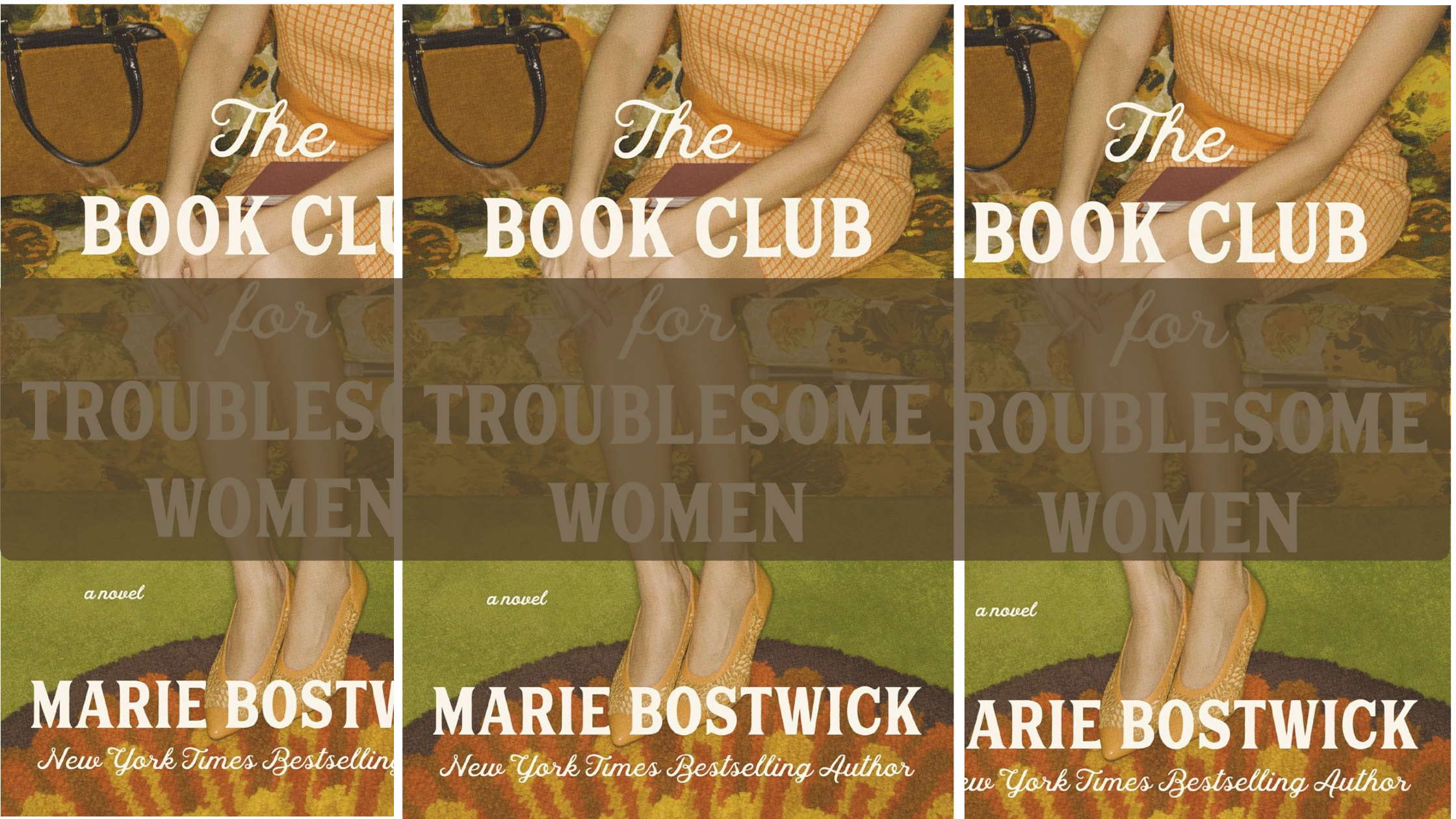
Reading The Book Club for Troublesome Women by Marie Bostwick from the perspective of an adult woman in 2026 was fun. Some of the expectations placed on women in the 1960s feel almost impossible to imagine today, and others aren’t nearly as far behind us as we’d like them to be.
Disclosure: This post contains affiliate links. If you buy something through these links, we may receive small commissions that support this site. As an Amazon Associate, we earn from qualifying purchases.
The novel centers on four women, each in a different marriage and with varying levels of satisfaction with the lives they’re living. Their conversations begin with literature and segue into questions they’re afraid to ask out loud. Over time, a neighborhood book club becomes a genuine friend group, supporting one another through multiple waves of challenges.
One recurring detail in the novel is a chore calendar that hangs on the refrigerator in each woman’s home, listing the days and times for everything from grocery shopping to vacuuming the curtains. While this seems absurd by current standards, in a pre-internet, pre-cell-phone world, this was a near-guaranteed way to run into your friends or foes. If grocery shopping in the same aisle was a good way to stay connected, it may very well have been welcome. This detail was a clear reminder of how narrowly many women’s lives were expected to unfold.
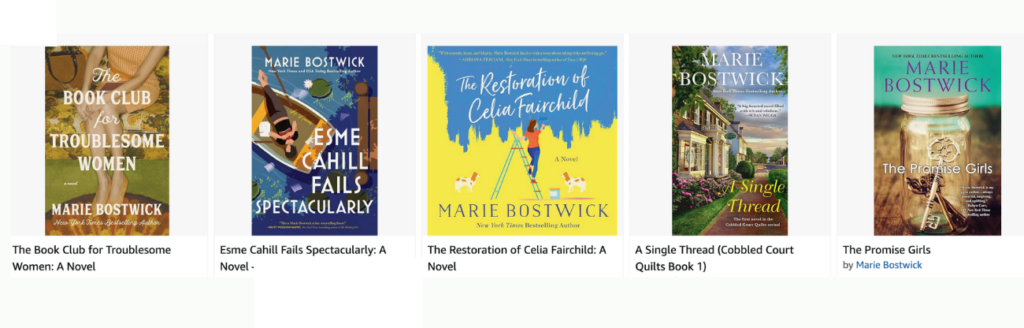
There are pieces of Viv’s, Bitsy’s, and Margaret’s stories that speak to the decisions we make about our personal, professional, and romantic lives, and who we want to be in each. Each of these women was admirable in her willingness to ask questions that probably weren’t socially safe to ask, or maybe weren’t answered very often in the 1960s. Going back to work, claiming a professional identity, and protecting time for personal work weren’t as common in this time period. Balancing their interests and desires with a mix of spoken and unspoken expectations added pressure, guilt, and a layer of complexity we’ve only partially shed in the last 50-plus years.
The standout, and most mavenhood in spirit, was Charlotte, who stepped out and built something of her own. Opening an art gallery wasn’t just a career choice. It became a place where artists, ideas, friendships, and possibilities intersected. She didn’t continue waiting for life to happen to her; she created a physical and emotional space where other people’s lives could expand alongside her own.
The Book Club for Troublesome Women proved an excellent choice for discussion in our 2026 book club because every woman came away with a different question. Whether our attention settled on Charlotte, Viv, Bitsy, Margaret, 1960s etiquette, or another aspect of the book, we closed it with a different set of questions than the ones we had when we opened it.
Some of the best conversational threads it inspired had very little to do with the plot. What qualifies as abuse today that wasn’t considered abusive in the 1960s? Which barriers to a woman’s success still exist? Are friendships with women more important than a romantic relationship? Those aren’t questions the novel asks or answers outright, and they’re only a few examples of what it invites us to consider. Your questions will be different. That’s the point. That’s exactly the kind of trouble we like

Book clubs seem to be everywhere right now, online, at bars, in parks, on talk shows, and across celebrity platforms. An estimated 13 million adults in the United States belong to one, and participation continues to rise. People are looking for community, and books offer a way to connect around ideas, concepts, and dreams. What’s new is how the format has evolved and created different ways to do that.
Book Clubs Beyond the Living Room
Oprah’s Book Club set the modern standard, turning literary fiction into national conversation and consistent bestsellers. Reese Witherspoon built on that momentum with selections that often move from page to screen. Dua Lipa’s Service95 Book Club curates globally minded titles, while Dakota Johnson’s TeaTime Book Club brings authors into direct conversation with readers. Together, these platforms have expanded the reach of book clubs beyond private gatherings and into mainstream conversation.
Today’s book clubs meet on Zoom, in person, or in some combination of both. Some groups gather online throughout the year and meet for dinner once, marking the ongoing discussion with an annual dinner. In some clubs, the focus moves beyond a single title to a genre or area of shared interest, with conversation shaped around a central theme.
New Formats
Business focused book clubs now meet on Zoom, often with the author joining the conversation. Members read the selected title in advance and gather for a live discussion and Q and A. The presence of the writer gives the hour a clear focus.
Silent book clubs have gained traction, creating space to read in the company of others. In this format, anywhere from a handful to hundreds of people sit together, read their own books in silence, and then decide whether to stay and talk. The individual focus in the company of others is part of the experience.

Cookbook clubs are another update to the traditional book club gathering. Instead of discussing a novel, members choose a cookbook, and each person prepares a recipe to share. The cookbook guides the menu, and the gathering is the tasting. Everyone arrives having contributed something tangible.
Cake Picnic carries the same idea onto a much larger scale. These events echo the energy of a cookbook club and are so popular that tickets sell out in minutes. At every tour stop, a ticket and a homemade cake are required for entry. Creativity and shared effort create connection, while long tables filled with cakes from hundreds of home bakers create excitement.
Events like Lectures on Tap move the concept into live learning. There is no assigned reading, and the lectures cover a wide range of topics. A speaker presents in a bar setting, followed by a discussion. Each lecture covers one topic and then moves into discussion.
A Return to Community
Across all of these formats, there is a clear return to community. Whether that reflects years of isolation during the pandemic, the rise of AI, or the glow-up of book club styles is hard to say. People are finding time to gather around something that sparks their interest and invites conversation.
For midlife women, connection becomes more intentional. At this stage, we curate our time. Attention has become a form of currency, and we choose carefully where to spend it. Finding like-minded people, or even those who challenge us, is a big part of why we keep showing up. A book, an event, or a lecture offers a starting point, and the exchange that follows builds real community.
