Posts about living in, understanding, and finding the best of mavenhood.
The Digital Magazine


The CHANI App is a popular astrology app that offers daily readings and in-depth information on signs, transits, and current astrological shifts. Chani Nicholas, the person behind it, has been on the astrology scene for more than twenty years, steadily building a following through writing, social media posts, and a YouTube channel. Nicholas also recently discussed her less mysticism, more emotional literacy, timing, and self-awareness approach to astrology in an in-depth interview on “On Purpose with Jay Shetty”. Her approach, encouraging the use of astrology as a guide, carries through to the CHANI App.
This page contains an affiliate link, which was added after the post was originally published. We may earn a small commission on items purchased through the link. Thanks Chani, and thanks readers!
The app experience centers on carefully translating astrology terminology into clear, relatable, bite-sized pieces. Astrological conditions are introduced as influences rather than predictions, and when high emotions are likely in play, they’re named without drama.
Daily and Weekly Readings
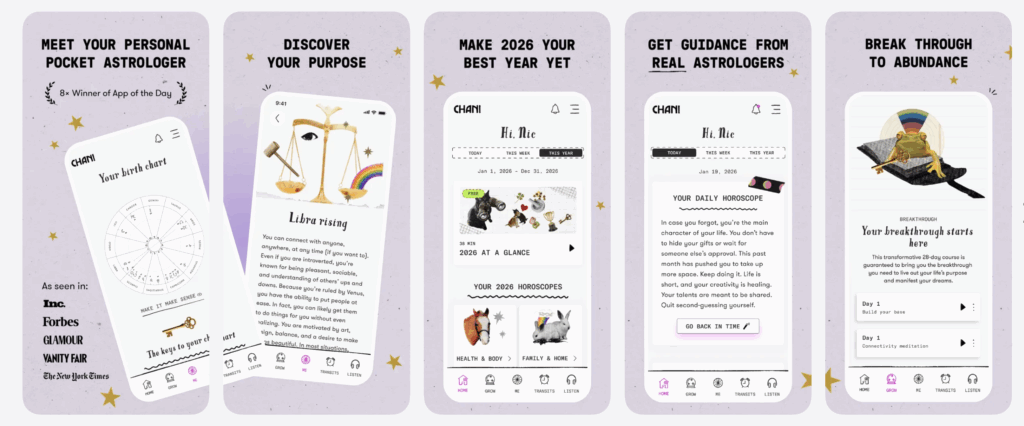
Nicholas relies on rising signs as the primary element of individualized readings. Daily horoscopes reference your birth chart, and the focus stays on internal movement, emotional currents, and recurring themes. Reading a daily entry feels complete in itself, and also fits within a weekly roundup. The app works equally as well when engagement ebbs and flows.
Weekly horoscopes widen the scope. As themes develop gradually across several days, ideas surface, recede, and return. This repetition is intentional and cumulative, meaning it builds through recognition. This calm approach distinguishes the app from more headline-driven astrology platforms.
Depth Beyond the Horoscope
The birth chart section is where the app offers its greatest depth. Planetary placements, houses, and aspects are explained in a simple, clear format. Interpretations avoid defining personality and instead acknowledge growth and change across a lifespan. The chart serves as a reference point and encourages readers to return to it at different life stages to read it differently.
Audio content supplements the written material and feels like a friend is explaining the movie you just watched together. Guided reflections and short grounding practices are designed as pauses, and are delivered at a calm, unhurried pace. Similarly, rituals and journal prompts are presented as invitations rather than assignments. There is no tracking or progress indicator, and no performative element to completing any of it.
Design, Access, and Fit
The app interface is uncluttered and navigationally intuitive, with a subdued color palette that reinforces its disdain for shock-style astrology. The slightly offbeat visuals, which carry through to the whole merchandise line, including books and cards, keep attention focused on the text. Nothing about the design suggests optimization for habitual engagement or dopamine-driven interaction.
The free version provides enough access to understand the app’s goals and style, including daily horoscopes and limited chart insights. The subscription unlocks additional depth and functionality, with a wealth of information and its related explanation available. It doesn’t promise clarity or certainty, and it often suggests users note patterns over time.
Of course, this app will not suit everyone. People seeking predictions or clear, set-in-stone answers may find the experience too understated or not gamified enough. The CHANI App has a coherent voice, design, and structure that reinforce the same message. The value becomes clearer with regular use, though occasional check-ins still feel worthwhile.
For those already familiar with Chani Nicholas’ work, the app provides a focused and well-organized home for what they value in her writing. For new users drawn to astrology as a reflective practice rather than a predictive one, it offers a thoughtful and consistent entry point. My subscription is on auto-renew.
